


Before You Pack: Travel with Nicotine Pouches Without Fines
Yes, you can travel with nicotine pouches in most countries, and airport security treats them like any other dry snack, not a liquid. The real risk sits at your destination, not the departure gate. Keep tins sealed in original packaging, pack them in your carry-on, and check the specific country you’re flying to before you go, because a handful of nations ban possession outright and transit stops can carry their own rules too.
TL;DR:
- Most countries permit carrying nicotine pouches for personal use, but checking local regulations is crucial due to varying bans and restrictions.
- Airport security generally treats pouches as a dry solid, allowing them in carry-on luggage without volume limits or declaration, but metallic tins may warrant a quick check.
- Using pouches discreetly during flights and avoiding opening tins during service or turbulence reduces the risk of airline crew intervention.
- Packing a small, sealed supply in original retail packaging for trips under a week generally prevents customs conflicts, but large quantities may be flagged as reselling.
- Traveling with pouches through transit in countries with bans or restrictions can inadvertently breach local law, so thorough pre-trip research is essential.
Table of Contents
- Travel with nicotine pouches through airport security
- Do airlines allow nicotine pouches on board?
- Which countries restrict or ban nicotine pouches?
- How much should you pack, and how should you pack it?
- Using nicotine pouches responsibly in the air
- What actually makes a pouch travel-friendly?
- Where to buy a travel-ready pouch before you fly
- Sources
- FAQ
Travel with nicotine pouches through airport security
Security staff classify nicotine pouches as a dry solid product, so the 100ml liquids rule governing gels, sprays and drinks simply doesn’t apply. There’s no volume cap, no clear plastic bag requirement, and no need to declare them separately at the tray point. A metal tin of pouches doesn’t usually trigger a bag alarm either, though anything metallic can occasionally prompt a quick visual check.
Carry-on is the smarter place for them regardless of the rules. Checked baggage sits in a cargo hold where temperatures swing far more than in the cabin, and checked luggage delays or misrouting are common enough that you don’t want your only supply riding in a bag that might not arrive with you.
Pro Tip: Extreme cold or heat in a cargo hold can dry out or degrade pouch flavour and texture over a long-haul sector, so anything you’re relying on for a multi-leg trip belongs in your hand luggage, not the hold.
A few habits make the security process faster and reduce the odds of a second look:
- Keep tins in their original retail packaging with the label intact.
- Place them in an easily accessible pocket rather than buried at the bottom of a bag.
- Avoid loose pouches rattling around outside a tin.
- Don’t mix pouches with vape liquids or other regulated items in the same pocket, since that can prompt extra scrutiny.
- If asked, simply state what the product is. Staff see them often enough that this rarely causes delay.
None of this is complicated, but it’s the difference between walking through security without a second glance and standing at the tray table explaining yourself while a queue builds behind you.
Do airlines allow nicotine pouches on board?
Airport security and airline policy are two separate things, and this is where most confusion happens. Passing security doesn’t automatically mean a carrier is happy with you using pouches mid-flight. Some airlines explicitly list smokeless tobacco and nicotine products among restricted in-cabin items in their conditions of carriage, while others say nothing at all and leave it to cabin crew discretion.
That discretion is the part travellers underestimate. A pouch used quietly under the lip during a long sector rarely draws attention. Opening a tin during meal service, or doing anything visible enough for a neighbouring passenger to notice and complain, is far more likely to get you a word from crew.
A short list of etiquette that avoids friction:
- Insert a pouch before boarding or during a quiet stretch of the flight.
- Never open tins during service or turbulence, when crew attention is highest.
- If a crew member raises it, stay calm and compliant. Arguing rarely helps.
- Check your specific carrier’s conditions of carriage before a flight if you’re unsure, particularly on airlines with stricter cabin policies.
Most of the time, nobody notices and nobody cares. But it costs nothing to be discreet.
Which countries restrict or ban nicotine pouches?
Legality varies enormously by country, and this is the single biggest source of trouble for travellers who assume pouches are treated the same way everywhere. Roughly speaking, destinations fall into four categories:
- Freely available. Pouches are sold openly and possession is unrestricted, similar to how they’re regulated across much of Europe and North America.
- Restricted sale, tolerated possession. Retail sale may be limited or age-gated, but a personal-use quantity brought in by a traveller usually isn’t an issue.
- Sale banned, grey-area possession. The product can’t be sold locally, and enforcement against a small personal supply is inconsistent.
- Outright banned. Possession itself is illegal, regardless of quantity or intended use.
Examples worth checking specifically before booking include France, Singapore, Australia and Thailand, all of which have applied restrictions or outright bans on nicotine pouches at various points according to compiled international travel guidance. Treat these as examples that prove the pattern, not a complete list. Rules shift, and a country that tolerated pouches last year may have tightened its stance since.
Transit adds a layer people miss entirely. Some bans apply inside the transit area of an airport, meaning you can be in technical breach of local law without ever clearing immigration, simply by carrying pouches through a connecting hub in a country with a possession ban. If your itinerary routes you through Singapore or another restrictive jurisdiction for even a short layover, that stop needs the same scrutiny as your final destination.
A practical checklist before you pack:
- Review official government travel advice for customs and import notes specific to nicotine products.
- Check every transit country on your itinerary, not just your final stop.
- Look at the airline’s and departure airport’s own guidance pages for anything carrier-specific.
- Keep receipts, and any prescription documentation if you use a medically prescribed nicotine product, in case you need to justify possession at a border.
None of these checks take more than a few minutes, and they’re considerably cheaper than an on-the-spot fine or a confiscated supply at immigration.
How much should you pack, and how should you pack it?
Customs officers are generally looking for signs of commercial resale, not personal use, so the goal is to pack quantities that obviously read as “one traveller, one trip” rather than “reseller.” As a rough guide: a weekend trip rarely needs more than a few tins, a week-long holiday requires a moderate number of tins, and even a long-haul trip of several weeks rarely justifies a large quantity for a single user. Beyond that, you start to look like you’re carrying stock rather than a personal supply.
Travel guides and policy scans consistently point to the same fix for customs friction: keep pouches in original, sealed retail packaging and carry only what a reasonable personal-use quantity looks like for your trip length.
A few packing habits reduce risk further:
- Keep every tin sealed and labelled exactly as it left the shop.
- Separate different nicotine formats, such as pouches and any patches or gum, into distinct labelled bags rather than one mixed pouch of loose products.
- Hold onto purchase receipts, particularly for larger quantities bought just before departure.
- If you use a prescribed nicotine replacement alongside pouches, carry the prescription or a pharmacy label as supporting evidence.
- If customs does seize items at a border, ask for a written receipt or reference number, and don’t argue the point at the desk. Appeals, where they exist, happen afterwards through official channels, not at the barrier.
Using nicotine pouches responsibly in the air
Cabin conditions change how a pouch feels compared with using one on the ground. Cabin pressure and lower humidity at altitude can make dehydration and mild cardiovascular strain more noticeable, so pacing yourself matters more in the air than on a normal day. A lower-strength pouch, in the region of 3 to 4mg, is usually the sensible in-flight choice, with a stronger 20mg format better saved for pre-boarding or after landing.
Spacing pouches out rather than working through several in quick succession, and drinking water alongside them, helps offset the dryness that long flights already cause. Disposal matters too: use the pouch’s own tin lid compartment or a sealed disposal pouch rather than leaving used pouches in a seatback pocket or tray table, both for hygiene and for discretion.
Pro Tip: If your destination bans pouches outright, plan the switch before you land, not after. Nicotine patches or gum, or buying a locally legal alternative once you’ve cleared customs, are far less stressful than trying to source anything once you’re already through immigration with a banned product in your bag.
For a fuller comparison of how pouches perform against other nicotine formats while travelling, this breakdown of pouches versus vapes covers the practical differences in more depth.
What actually makes a pouch travel-friendly?
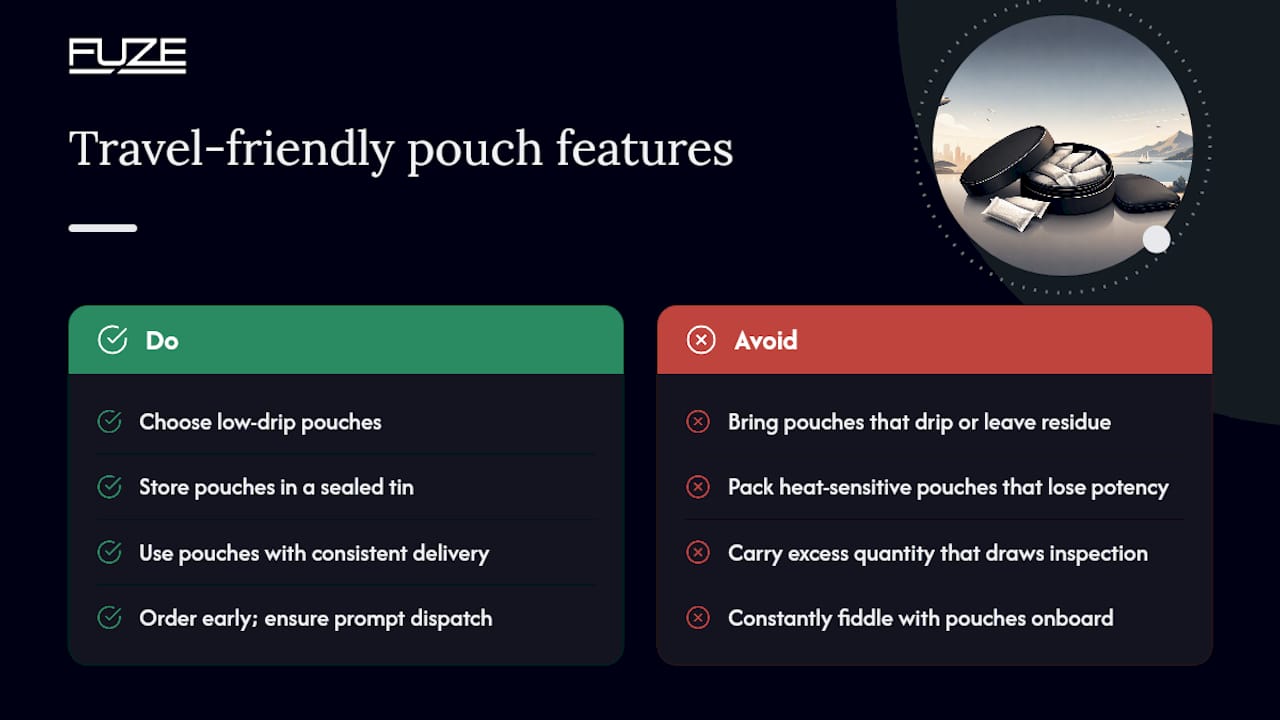
Most of the friction travellers hit with pouches isn’t about legality. It’s about the product itself being badly suited to travel in the first place. A pouch that drips leaves residue in a jacket pocket at 35,000 feet. A pouch that loses potency after a few hours in a hot bag makes you pack more than you need, which is exactly the kind of quantity that draws a customs officer’s eye.
Some nicotine pouch brands use low-drip pouch technology to improve the travel experience and reduce mess, making accessories like the windproof jet torch lighter useful additions for travellers who carry lighters. A pouch that stays dry, delivers nicotine consistently, and sits neatly in a sealed tin provides a better experience for travel than one that needs constant fiddling in a cramped seat. If you’re new to the format, our guide to what a nicotine pouch actually is covers the basics of use and storage. Ordering in advance and prompt dispatch help ensure your nicotine pouches arrive in time for travel.
*— FUZE Team
Where to buy a travel-ready pouch before you fly
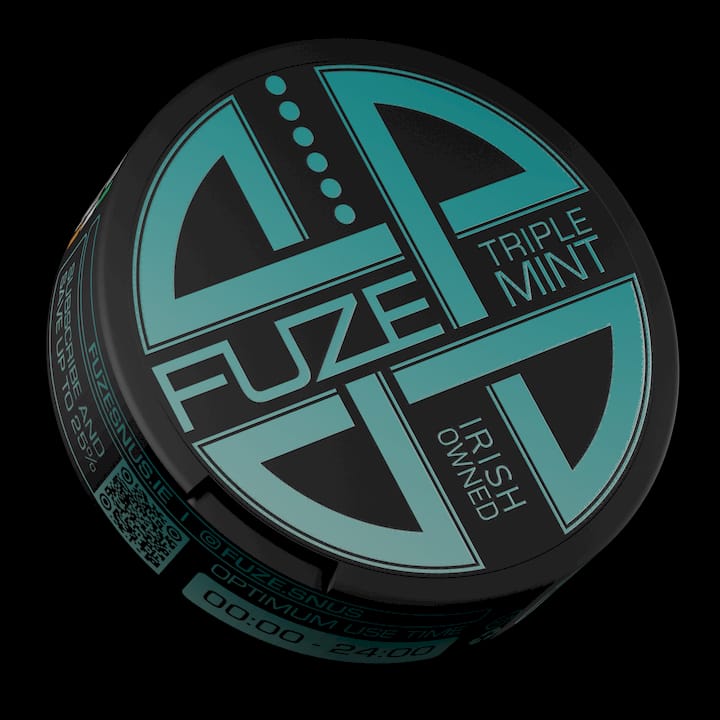
If you’re packing for a trip, Triple Mint 20mg is the pouch worth having in your carry-on. It ships in a sealed tin that holds up to the knocks of a packed bag, delivers a consistent mint flavour for the full 30 to 60 minute window, and doesn’t leave the drip residue that makes cheaper pouches a liability in a jacket pocket.
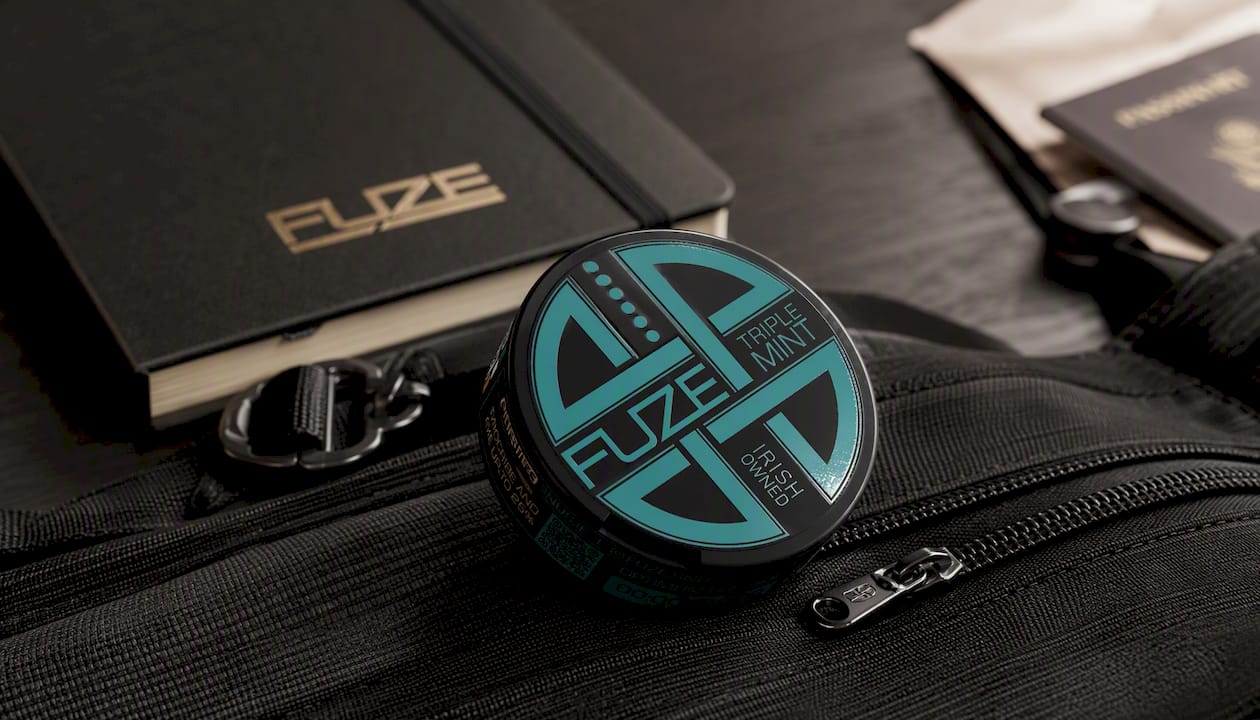
Ordering ahead matters more for travel than for everyday use, since you want stock sealed and settled before departure day rather than opened the morning you fly. Place your order by 6pm for same-day dispatch, and always run your destination through the country policy scan before you buy in bulk for a trip abroad. Ireland’s fast, reliable delivery means there’s no reason to leave packing until the last minute. Browse the Triple Mint 20mg product page and get your tins sorted before your next flight.
Sources
Three types of source are worth bookmarking before any international trip involving nicotine pouches:
- Gov
- Can you bring nicotine pouches on a plane? 2026 TSA & international travel guide | Nicozon
- Can you take nicotine pouches on a plane? (Airportsmokingzones)
FAQ
Can I take nicotine pouches through airport security?
Yes. Security treats them as a dry solid product, not a liquid, so the 100ml liquids rule doesn’t apply and there’s no volume restriction.
Are you allowed to travel with nicotine pouches?
In most countries, yes, though a handful of destinations, including France, Singapore, Australia and Thailand, apply restrictions or outright bans, so checking the destination’s rules before you fly is essential.
Do I need to declare nicotine pouches at customs?
For a normal personal-use quantity in sealed retail packaging, declaration usually isn’t required, but larger quantities or destinations with stricter import rules may need you to declare them; check government travel advice for your specific destination.
Is a nicotine pouch allowed in the airport?
Yes, in general most airports permit nicotine pouches through security and within terminals, since they carry no liquid or combustion restrictions, though individual airline in-flight policies can still vary.
Recommended
- Tobacco-free Snus (Nicotine Pouches) vs Vapes
- Vapes vs Snus ( Nicotine Pouches ) in Ireland
- What is a Snus | Nicotine pouch and how do I use it?
This is for general information purposes only, not medical advice. Please consult your doctor if you have medical queries. This article may not be fully accurate or fully researched. Please do your own research and consult professionals before using nicotine. Nicotine is an addictive substance.