


Keep Nicotine Pouches Fresh in Ireland: Store at 4–8°C to Add Months
For everyday tins, keep the sealed can at stable room temperature, somewhere cool, dry and dark, then reseal an opened can and finish it within one to two weeks, or refrigerate it to stretch that to three or four weeks. For bulk stock, refrigerate sealed cans to add months of peak freshness, and reserve the freezer for long-term archives using proper airtight packing and a slow thaw. Skip heat, sunlight, damp rooms, and hot cars, and always keep tins somewhere children and pets cannot reach them.
TL;DR:
- Nicotine pouches generally maintain peak quality for 12 to 18 months in sealed cans, with some formulations lasting closer to 24 months.
- Once opened, refrigeration can extend flavor and moisture retention for several weeks to months, while room temperature storage shortens shelf life.
- Proper storage conditions, including cool temperatures around 15-21°C, humidity between 30-70%, and dark environments, are crucial for preserving pouch quality.
- Freezing sealed cans for long-term archiving requires careful vacuum sealing and gradual thawing; improper freezing can damage pouch texture.
- Store pouches away from heat, light, and humidity, and always keep tins out of reach of children and pets to ensure safety and freshness.
Table of Contents
- How long do nicotine pouches last, sealed and opened?
- What temperature, humidity and light keep pouches fresh?
- Should you refrigerate or freeze nicotine pouches?
- How do you protect pouches while travelling?
- Why do pouches go dry, and what’s safe to keep using?
- How FUZE pouches respond to storage, and what we recommend
- A note on storing pouches responsibly
- Triple Mint 20mg: built for everyday use, stored the right way
- Where this guide’s facts come from
- Sources
- FAQ
How long do nicotine pouches last, sealed and opened?
A sealed can of nicotine pouches typically holds its quality for 12 to 18 months, with some stabilised formulations pushing closer to 24 months. That number sits on the base of the can or lid as a production date or a best-before stamp, so check there first rather than guessing from memory.
Once you break the seal, the clock speeds up considerably. An opened tin stored at room temperature tends to hold peak flavour for a short period before the pouches start drying out and the taste flattens. Refrigeration changes that equation: moving an opened can into the fridge can extend peak flavour for a longer period compared to room temperature storage, depending on how tightly you reseal it between uses.
It helps to separate what “best before” actually means from what people assume it means:
- It is a quality marker, not a safety cliff. Nicotine and the pouch material rarely become dangerous the day after the printed date passes.
- The experience degrades gradually. Flavour fades, moisture drops, and the release feels weaker rather than instantly wrong.
- Rotation matters more than panic. Buying in bulk only pays off if you use the oldest stock first and store it correctly in the meantime.
If you are the sort of person who buys several tins at once, treat the best-before date as your rotation guide, not an emergency deadline. A tin that is a fortnight past date and has been stored well is a different product to one that spent a summer on a car dashboard.
What temperature, humidity and light keep pouches fresh?
Three environmental factors decide how fast your pouches lose quality: temperature, humidity, and light. Get all three right and a tin will taste close to how it did on day one for most of its shelf life.
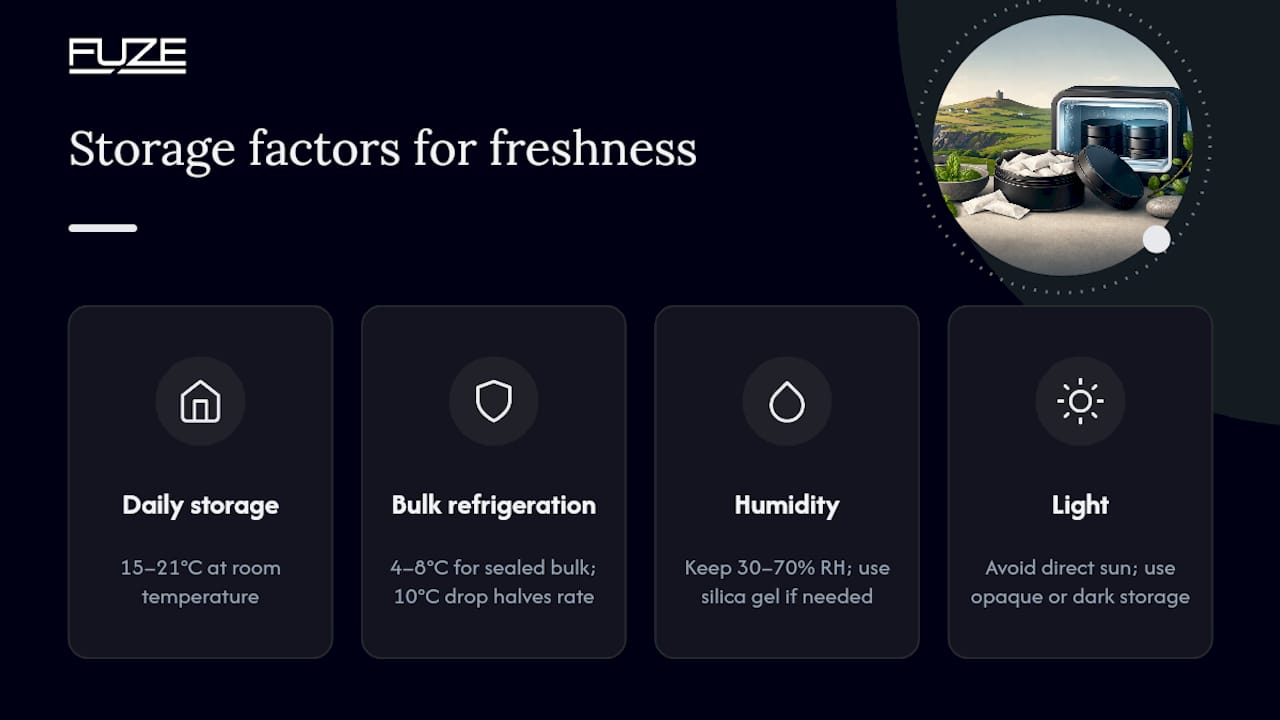
Temperature is the biggest lever. Room temperature storage for daily tins should sit around 15 to 21°C, cool enough to slow degradation without special equipment. For sealed bulk cans, a fridge running at 4 to 8°C does noticeably more work, because chemical degradation follows roughly the same pattern as most reactions governed by the Arrhenius principle: every 10°C drop in temperature roughly halves the rate at which flavour compounds and nicotine break down. That is not a marketing claim, it is basic chemical kinetics, and it is the entire reason refrigeration works for bulk storage.
Humidity needs to sit in a middle band. Very dry air, below roughly 30% relative humidity, pulls moisture out of the pouch material and leaves it brittle and harsh. Very damp air, above about 70%, risks the opposite problem: pouches turning soggy or, in the worst cases, growing mould. If your home runs unusually dry or humid, a small silica gel sachet dropped into an airtight storage box levels things out without any real effort.
Light is the factor most people ignore entirely. UV exposure degrades flavour compounds through photo-degradation, and plastic packaging can actually absorb aromatic compounds out of the pouch itself, a phenomenon called flavour scalping. Store tins in an opaque container or a dark cupboard rather than on an open shelf in direct sun.
Pro Tip: A kitchen drawer away from the oven, or a bedroom drawer away from a radiator, beats almost any shelf that gets afternoon sun. Dark, dry, and steady beats fancy every time.
Should you refrigerate or freeze nicotine pouches?
Refrigeration is a useful storage upgrade for those who buy more than a tin or two at a time, but it only works if you do it properly.
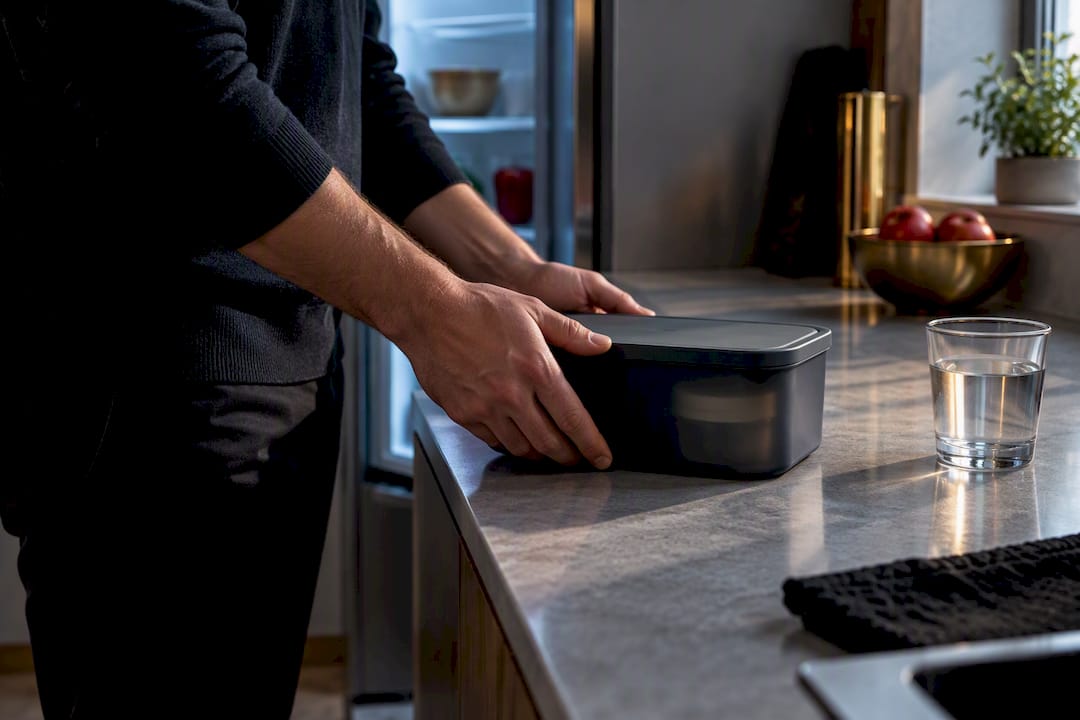
Sealed cans benefit the most: chilling them at 4 to 8°C slows chemical degradation and helps the pouches retain moisture, which is exactly what preserves both texture and nicotine release over months rather than weeks. Opened cans also benefit, staying palatable for noticeably longer than they would on a countertop, but pack them inside a sealed freezer bag first. A fridge is full of competing smells, and pouch material can pick up odours from whatever else is in there.
Freezing is a different tool for a different job, and it is not for everyday tins. It only makes sense for sealed cans you are archiving for the long term, and it needs a proper protocol:
- Check the can is fully sealed and undamaged before you start.
- Vacuum seal it, or wrap it in a Mylar bag, to keep air and moisture out.
- Place the wrapped can inside a standard freezer bag for a second layer of protection.
- Store it flat, away from the freezer door where temperature swings are worst.
- When you want it, move it to the fridge and let it thaw gradually for 24 hours before opening.
- Never refreeze a can once it has thawed.
Skip the vacuum sealing step and you risk ice crystals forming inside the pouch material, which damages texture on thawing and leaves pouches feeling gritty or falling apart. That single step is what separates a freezer archive that works from one that ruins the product.
Pro Tip: Bring a fridge-cold tin back to room temperature slowly. Ten to twenty minutes on the counter is usually enough for a chilled can, whereas a can that has been fully frozen needs the full fridge day before you even think about opening the lid. Rushing this step is what causes condensation inside the tin.
How do you protect pouches while travelling?
Cars and cabins are where most storage mistakes happen, mainly because people forget a sealed tin behaves differently under pressure and heat than it does sitting on a shelf.
- Never leave a tin in a car on a warm day, even for a short errand; dashboard and glove box temperatures climb far faster than outside air.
- Use an insulated pouch or a small cool bag if you know you will be somewhere hot for a few hours.
- Before a flight, slightly crack the lid to “burp” the can and equalise pressure. Cabin pressure changes during ascent can cause a fully sealed tin to expand and pop open, which is a genuinely annoying way to lose a tin’s worth of pouches inside your bag.
- Keep tins in carry-on luggage rather than checked bags. The hold is colder and less temperature-stable than the cabin, and rough handling is more likely.
- For a day out, transfer just enough pouches into a small sealed container and leave the main tin sealed and stored properly at home or in your hotel room.
None of this takes more than a few seconds of forethought, and it is the difference between a tin that survives a trip intact and one that turns up half empty in your suitcase.
Why do pouches go dry, and what’s safe to keep using?
Most storage failures trace back to the same handful of habits. Cans left near radiators or on windowsills bake slowly over weeks without anyone noticing. Bathrooms, despite feeling convenient, run humid and warm from showers, which is close to the worst possible combination. Bulk tins that get opened and closed constantly lose moisture every single time, faster than a tin you open once a day. Storing two strong or contrasting flavours in the same box can also cause a subtle cross-contamination of scent over time.
Spotting a pouch that has gone past its best is straightforward once you know what to look for:
- Dry, brittle texture that crumbles rather than sitting soft under the lip.
- Muted or flat flavour that fades within a minute or two instead of lasting.
- Off-colour pouches, noticeably darker or lighter than when the tin was fresh.
One distinction worth knowing: white, crystalline dusting on pouches is usually salt bloom, a benign efflorescence caused by temperature swings, and it is not a safety issue. Fuzzy, coloured growth is mould, and that means the tin goes straight in the bin, no exceptions.
For mildly dried pouches, a short rest in the fridge inside a sealed bag can restore some moisture, and some users swear by resting an opened tin near a barely damp paper towel inside a sealed container for an hour or two. Neither trick works on a tin that has properly degraded. If the flavour is gone and the texture has turned to dust, stop trying to rescue it and start a fresh tin.
How FUZE pouches respond to storage, and what we recommend
FUZE pouches use a rapid-release, low-drip design, built to deliver a smooth, fast nicotine release without the wet, dripping sensation common in older-style pouches. That drier moisture profile has a direct storage implication: FUZE tins tend to hold their texture well through normal daily handling, but they still follow the same rules as any nicotine pouch once opened.
For everyday use, keep your FUZE tin sealed between uses and stored somewhere cool, dry and out of direct light, exactly as you would with the general storage advice above. A few brand-specific notes worth knowing:
- If you refrigerate a FUZE tin as part of bulk storage, let it warm on the counter for 5 to 15 minutes before opening, which avoids condensation forming inside the lid.
- Order early for delivery in eligible areas, so there is rarely a reason to let backup stock sit around longer than it needs to.
- Each pouch is designed to last between 30 and 60 minutes per use, which is worth factoring into how quickly you work through an opened tin.
If you want more detail on pouch formats and how the release mechanism actually works, our guide on what a nicotine pouch is and how to use it covers the anatomy of a pouch in more depth.
A note on storing pouches responsibly
Good storage isn’t only about flavour. It’s about keeping pouches out of reach of children and pets, in the original child-resistant tin, every single time, no exceptions for convenience. Public-health guidance is consistent on this point: secure, child-resistant storage is the single most important safety habit around any nicotine product, and it costs nothing to follow.
We’d rather you got a tin that lasted exactly as long as it should, tasted right on the last pouch as it did on the first, and never ended up somewhere a child could find it. If you’ve got a storage question specific to a FUZE product, or you’ve found a technique that works better than what’s written here, get in touch through our support channels. We read every message.
— FUZE Team
Triple Mint 20mg: built for everyday use, stored the right way
This brand is an option for readers who want a pouch that survives daily use without a fuss over drip, dryness or fade. Triple Mint 20mg has a rapid-release, low-drip design, with flavour built to last between 30 and 60 minutes per pouch, and none of the wet residue that makes some pouches uncomfortable to keep in.
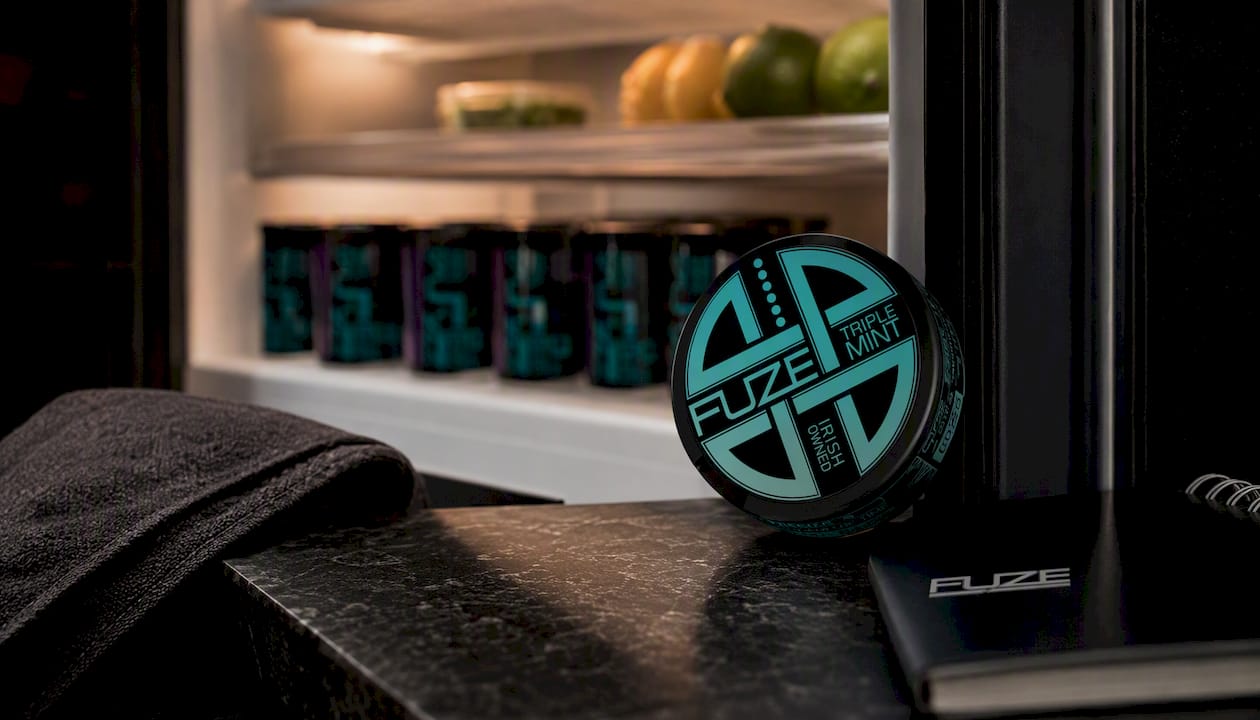
Order early and same-day delivery may be available in eligible areas, so there’s little reason to stockpile more than you actually need. For daily tins, keep the sealed can in a cool, dry cupboard away from light and heat. For backup stock, a fridge extends peak freshness by months rather than weeks. View the Triple Mint 20mg product page to check current availability and place an order.
Where this guide’s facts come from
The storage timelines and protocols above draw on a mix of retail shelf-life guides, technical storage explainers, and public-health sources. For further reading:
- How long nicotine pouches last and how to store them properly
- Complete guide to nicotine pouch storage
- HSE smokeless products guidance
- Nicotine pouch use in Great Britain, King’s College London
Sources
- How Long Nicotine Pouches Last and How to Store Them Properly
- Nicotine pouch use in Great Britain (King’s College London)
FAQ
Is it okay to keep nicotine pouches in the fridge?
Yes, refrigerating a sealed can at 4 to 8°C is one of the most effective ways to extend freshness, and it can add months to a sealed tin’s peak quality. Just seal opened cans in a bag first, since fridge storage without that step risks the pouches picking up odours from other food.
Is two pouches a day too much?
There’s no single safe daily count that applies to everyone, since it depends on strength, individual tolerance and personal nicotine goals. This guide focuses on storage rather than dosage, so speak with a healthcare professional if you have specific questions about how much nicotine is right for you.
Can dentists see if you use nicotine pouches?
Dentists can sometimes notice signs associated with pouch use, such as gum irritation or minor tissue changes at the placement site, during a routine check-up. That’s a dental health question rather than a storage one, and it isn’t something this guide’s sources address in detail.
Can I leave a pouch in for two hours?
Most FUZE pouches are designed to deliver their flavour and release over 30 to 60 minutes, so a pouch left in for two hours will have well passed its intended release window. Beyond storage advice, how long you keep a pouch in is a personal usage choice rather than a freshness issue.
Do nicotine pouches actually expire?
Sealed cans carry a best-before date, typically 12 to 18 months from production, marking a quality fade rather than a hard safety cutoff. Pouches past that date usually taste flatter and feel drier rather than becoming unsafe overnight.
Recommended
- Vapes vs Snus ( Nicotine Pouches ) in Ireland
- Tobacco-free Snus (Nicotine Pouches) vs Vapes
- What is a Snus | Nicotine pouch and how do I use it?
This is for general information purposes only, not medical advice. Please consult your doctor if you have medical queries. This article may not be fully accurate or fully researched. Please do your own research and consult professionals before using nicotine. Nicotine is an addictive substance.