


8.5 vs 8.3: Nicotine Pouches vs Lozenges, Quitting or Discretion
Nicotine lozenges are clinically authorised NRT and the recommended first-line choice for structured quitting. Nicotine pouches are a tobacco-category product many people prefer for discretion and a faster, punchier hit, but they carry no cessation authorisation.
TL;DR:
- Nicotine pouches deliver nicotine faster and more discreetly than lozenges but lack clinical approval for cessation support.
- Pouches offer higher flexibility in strength and longer session times, while lozenges provide fixed dosing and lower cost with subsidies.
- Both products rely on buccal absorption, with pouches potentially causing localized gum irritation if used excessively.
- Clinical evidence shows similar nicotine absorption for pouches and lozenges, but their effectiveness for long-term quitting remains uncertain.
- Pricing and availability differ, with lozenges widely accessible in pharmacies and pouches primarily sold online or through specialized retail channels.
Table of Contents
- Nicotine pouches vs lozenges: use, discretion and cost compared
- How does nicotine absorption actually work in the mouth?
- What does the clinical evidence actually show?
- Are there side effects and who should avoid these products?
- Which should you actually try first?
- How much do pouches and lozenges cost compared with each other?
- Where can you actually buy pouches and lozenges?
- What’s the environmental footprint of each product?
- An honest look at why adults land on one or the other
- Fuzesnus pouches worth trying if you’re leaning towards discretion
- Sources
Nicotine pouches vs lozenges: use, discretion and cost compared
A lozenge dissolves slowly in the cheek over roughly 20 to 30 minutes, releasing nicotine as it breaks down. A pouch gets tucked between the gum and lip and stays there for anywhere between 20 and 60 minutes, with the nicotine release shaped by the pouch’s pH and formulation rather than a slow melt. That difference in mechanism is why many pouch users describe a sharper, faster sensation even when the total nicotine delivered is comparable.

Discretion tips clearly towards pouches. There’s no packaging to unwrap, no visible product in the mouth, and no altered speech the way a dissolving lozenge can cause mid-conversation. Lozenges, on the other hand, often come with a cost advantage where health schemes or pharmacy subsidies apply to authorised NRT, something no pouch brand can offer given its regulatory category.
Here’s how the practical differences stack up:
- Dose control: lozenges come in fixed pharmaceutical strengths tied to clinical dosing guidance; pouches offer a wider spread of strengths but without the same clinical titration schedule.
- Session length: lozenges finish in half an hour; pouches can be left in for up to an hour depending on preference.
- Social use: pouches are silent and invisible; lozenges require a moment where your mouth is visibly occupied.
- Access to subsidy: authorised lozenges may qualify for pharmacy or health-scheme support in some regions; pouches, as a consumer tobacco-category product, generally do not.
Neither format is objectively “stronger”. The difference is texture of experience, not just numbers on a label.
How does nicotine absorption actually work in the mouth?
Both products rely on buccal absorption, meaning nicotine passes through the lining of your mouth and cheek directly into the bloodstream rather than being swallowed and processed through the gut. That’s why chewing a lozenge like gum, or swallowing its residue, wastes much of the dose.
Pharmacokinetic researchers describe three figures that matter here: Cmax (the peak nicotine concentration reached), AUC (total nicotine exposure over time), and Tmax (how quickly that peak arrives). A faster Tmax generally means quicker craving relief, but it also raises the risk of overuse if you’re not paying attention to timing.
A few technique points make a real difference to how well either product works:
- Let a lozenge dissolve naturally against the inside of your cheek rather than crunching or swallowing it.
- Rotate pouch placement between sides of your mouth rather than parking it in the same spot every time.
- Avoid coffee, juice, or other acidic drinks in the minutes around use, since acidity can reduce nicotine uptake through the oral lining.
Pro Tip: If cravings hit hardest first thing in the morning, use your fastest-acting product then and save slower-release options for the rest of the day, when steadier absorption matters more than a quick spike.
What does the clinical evidence actually show?
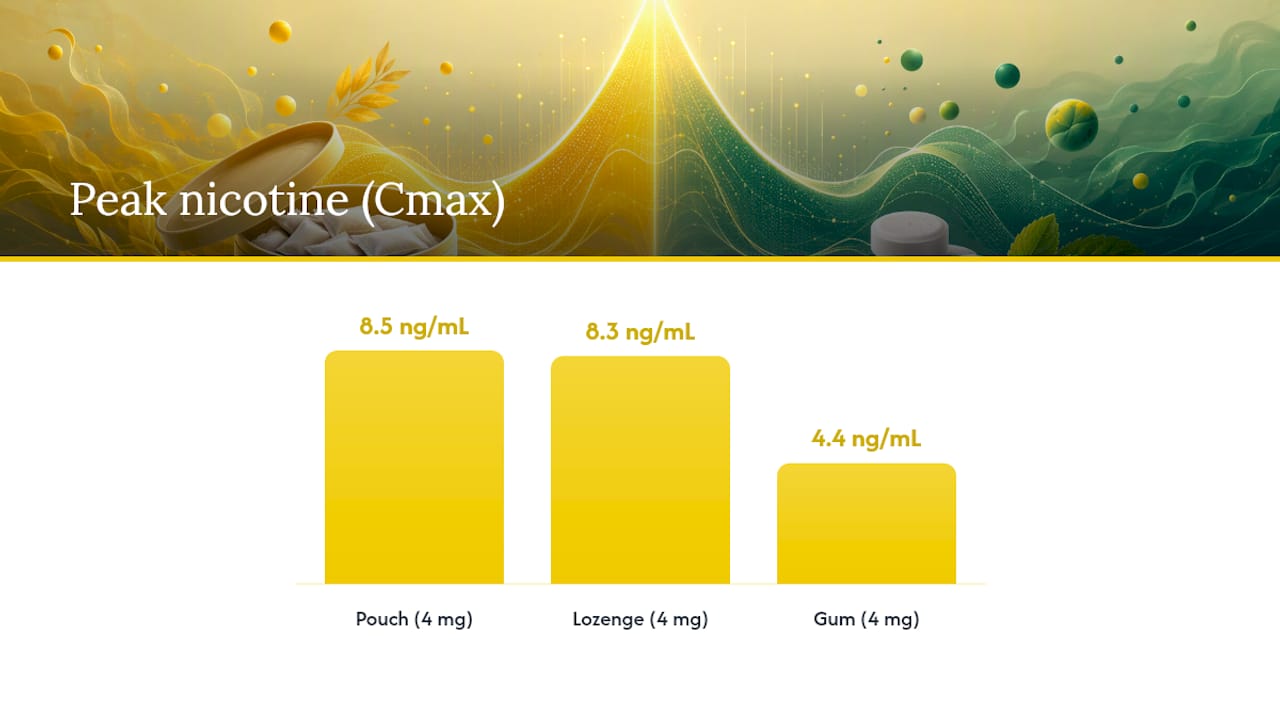
A randomised pharmacokinetic study comparing a 4 mg pouch, a 4 mg lozenge, and 4 mg gum found the pouch reached a Cmax of 8.5 ng/mL against the lozenge’s 8.3 ng/mL, both well ahead of gum’s 4.4 ng/mL. AUC values told the same story: 30.6 ng·h/mL for the pouch versus 31.5 ng·h/mL for the lozenge, confirming near-identical nicotine bioavailability between the two despite very different formats.
The full published trial data goes further, reporting that participants rated the pouch higher on subjective satisfaction than the lozenge in that particular study, even though nicotine delivery was essentially matched.
Pouch Cmax: 8.5 ng/mL. Lozenge Cmax: 8.3 ng/mL. Gum Cmax: 4.4 ng/mL. Comparable delivery, very different user experience.
Where the evidence thins out is cessation itself. A Cochrane review looking specifically at pouches for quitting smoking, vaping, or other tobacco found only limited, low-certainty evidence on whether they help people quit, though no short-term harms stood out either. Lozenges, by contrast, sit inside a decades-old NRT evidence base with established cessation outcomes behind them. Pilot trials on higher-strength pouches suggest they may reduce cigarette consumption more than lower-strength versions, but sample sizes remain small and the findings are preliminary. This is a gap longer, independently funded trials still need to close.
Are there side effects and who should avoid these products?
Both products can cause hiccups, mild nausea, or throat irritation, especially early on while your mouth adjusts. Pouches carry an additional, more specific concern: dentists have reported localised gum irritation and tissue changes where a pouch sits in the same spot for extended periods, day after day. The British Dental Journal has flagged rising cases of this pattern, particularly among habitual users who don’t vary placement.
Certain groups should avoid nicotine products altogether, regardless of format. Public-health guidance is explicit that nicotine pouches are not safe for youth or pregnant people, and neither pouches nor lozenges are appropriate for anyone with no prior nicotine use starting purely out of curiosity.
Simple habits reduce most of the risk:
- Rotate pouch placement between the left and right sides of your mouth, and don’t leave one in longer than recommended.
- Maintain regular oral hygiene and dental check-ups if you use pouches habitually.
- Stop and see a dentist promptly if you notice persistent soreness, whitening, or gum recession at a placement site.
- Speak to a pharmacist before starting either product if you’re pregnant, under 18, or have existing oral health conditions.
Separately, a broader scoping review found tobacco-free pouches generally show lower toxicant levels than smoked tobacco and some smokeless products, though long-term population data is still emerging.
Which should you actually try first?
Your goal decides this more than any spec sheet does.
- If your intent is structured quitting, start with a lozenge. It’s the clinically authorised route, backed by the deepest cessation evidence, and gives you a defined dosing schedule to follow.
- If you’re switching from smoking or vaping and discretion matters most, a pouch is the more practical daily fit, particularly at work or in social settings where visible NRT use feels awkward.
- If your goals are mixed, speak to a pharmacist or GP before settling on one. They can advise on strength, timing, and whether combining a steady-release patch with a single fast-acting product (pouch or lozenge, not both) suits your pattern of cravings.
Pro Tip: Never stack two fast-acting products at once. Pairing a patch for baseline coverage with one fast option for breakthrough cravings works far better than reaching for a pouch and a lozenge simultaneously, which just risks overshooting your intended dose.
Ask your pharmacist about strength equivalence between formats, how long to persist before switching, and whether local quit-support services offer free or subsidised NRT before you buy anything.
How much do pouches and lozenges cost compared with each other?
Pricing structures differ enough to matter if you’re using either product daily. Lozenges are typically sold in boxes of a fixed count and fixed strength, with pharmacy pricing that can be softened where NRT subsidy schemes apply, an advantage tied directly to their clinical authorisation status.
Pouches are sold by the tin, usually with a higher can count per pack, and pricing scales with both strength and flavour range rather than clinical dosing bands. Because pouches sit outside the NRT category, they’re never eligible for the same subsidy or reimbursement pathways, so the sticker price is the real price. For heavy daily users, the per-tin cost of pouches can undercut the ongoing cost of unsubsidised lozenges, though this varies by brand, strength, and where you shop. Buying in multi-tin bundles, where available, tends to bring the per-pouch cost down further than buying single tins repeatedly.
Where can you actually buy pouches and lozenges?
Lozenges are widely stocked in pharmacies and supermarkets, and their NRT status means you’ll find them behind the counter or on general sale depending on strength, often alongside patches and gum.
Pouches sit in a different retail lane. They’re sold online direct from brands, through specialist retailers, and increasingly through travel retail and duty-free channels for people who want to stock up before flying. Nicotine pouch brands often offer same-day shipping within select Irish counties when ordered before 6pm, alongside international shipping and a travel retail line built for duty-free and in-flight sales. That dual channel, direct-to-consumer plus travel retail, is becoming the norm for pouch brands, whereas lozenges remain almost entirely a pharmacy and grocery product. If you’re comparing pouches to another nicotine format entirely, it’s worth reading how pouches stack up against vapes before deciding which category to shop in at all.
What’s the environmental footprint of each product?
Lozenges typically come in blister packs or small plastic bottles, generating packaging waste that’s broadly recyclable depending on your local council’s rules, but the lozenge itself dissolves completely with nothing left to dispose of.
Pouches leave behind a used pouch after every session, plus the tin itself once it’s empty. Most brands recommend disposing of used pouches in general waste rather than flushing or littering them, since the fibrous pouch material isn’t designed to biodegrade quickly. Tins are often reusable or recyclable depending on material, but the daily habit of discarding individual used pouches creates a steadier waste stream than a lozenge box that lasts weeks per pack. Neither product has a strong environmental case built around it yet, and this is an area where the industry, including pouch manufacturers, has more work to do on end-of-life disposal guidance.
An honest look at why adults land on one or the other
Most adults who switch to pouches do it for the same reason: they want nicotine without the visible ritual, whether that’s escaping vaping’s clouds or cigarettes’ smell (Disposable Vapes in Vegas | Smokers Alley). Others stick with lozenges precisely because the structure, the fixed dosing, the clinical backing, suits a genuine quit attempt better than a discreet consumer product ever could. Neither instinct is wrong. Fuzesnus’s own guidance on pouch use reflects what we hear repeatedly from adults exploring the category: the right answer depends entirely on what problem you’re actually trying to solve.
— FNGN
Fuzesnus pouches worth trying if you’re leaning towards discretion
If the comparison above has you leaning towards pouches rather than lozenges, Some pouch brands build their ranges specifically around a low-drip, rapid-release experience that makes discretion practical rather than just theoretical.
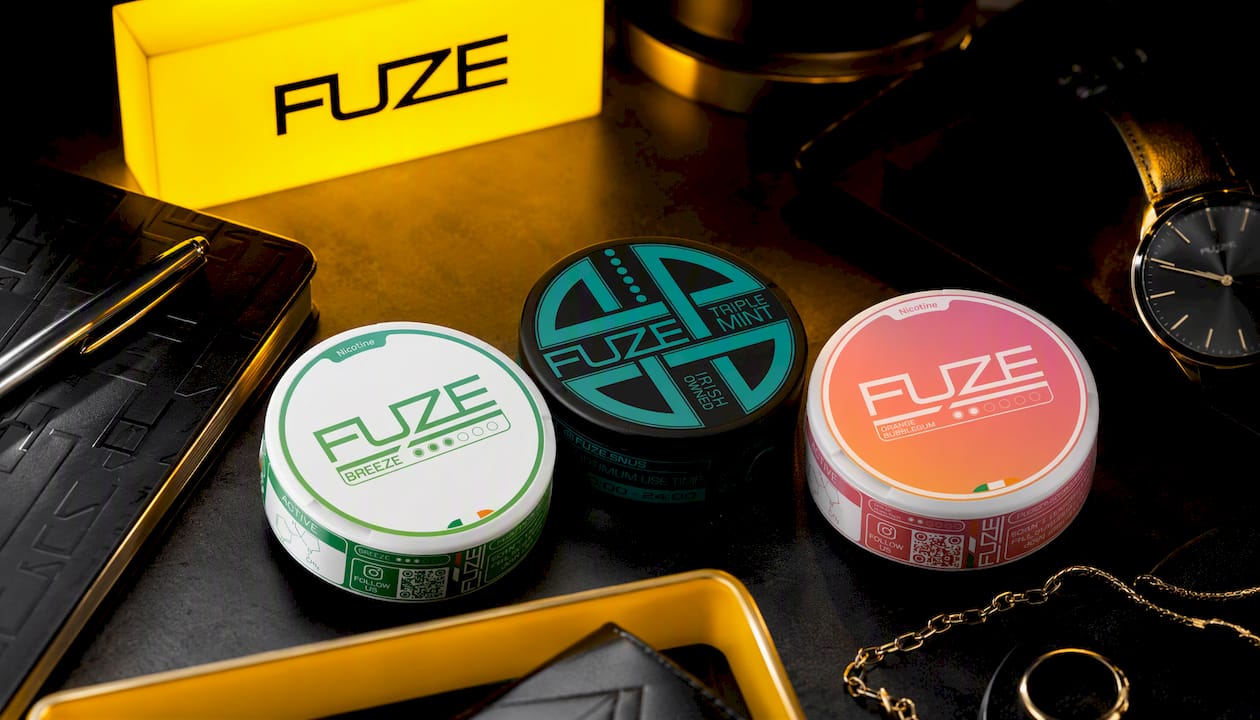
BREEZE 10mg sits in the middle strength range, a solid starting point if you’re moving away from vaping or cigarettes and want a balanced daily option. Triple Mint 20mg is built for established users who need a stronger hit without switching to a completely different format. Orange Bubblegum 8mg suits anyone testing the category for the first time or wanting a lighter dose alongside other supports. These products use rapid-release, low-drip pouch technology, designed to avoid the unpleasant seepage common with some other pouch brands. Orders placed before 6pm often qualify for same-day delivery in select Irish counties. These products are intended for adult nicotine users aged 18 and over. Browse the full range and place an order today.
This article is general information, not a substitute for advice from a qualified doctor. Consult a qualified healthcare professional about your own circumstances before acting on anything here.