


7 Science Backed Ways to Avoid Smell From Nicotine Pouches in Ireland
Nicotine pouches don’t burn, so they release no smoke and leave no lingering tobacco smell on clothes or in rooms. A narrative review confirms this, though flavoured pouches carry a mild scent detectable only up close. Nicotine can dry out your mouth, and that’s the real factor behind breath odour, not the pouch itself.
TL;DR:
- Nicotine pouches produce no smoke or tobacco smell, with scent mostly coming from flavorings that fade quickly once exposed to air.
- The detectability of scent increases with strong flavors, warm environments, or improper storage, but remains faint and short-lived overall.
- Using pouches can cause dry mouth by reducing saliva flow, which may lead to bad breath if oral hygiene is neglected, especially after extended use.
- Higher nicotine strength and thicker pouch formats tend to increase dry mouth and potential breath issues, while low-drip designs help minimize saliva disruption.
- Discreet use involves proper hydration, oral hygiene, cool storage, and careful disposal, but total odorless operation is not guaranteed.
Table of Contents
- Where any nicotine pouch smell actually comes from
- Do nicotine pouches make your breath smell? The oral mechanisms explained
- Flavour, strength and format: what changes detectability
- How to avoid breath odour and stay discreet while using pouches
- How FUZE’s pouch design factors into discretion
- Can nicotine pouch aromas trigger allergies or sensitivity?
- When discretion matters: etiquette and realistic expectations
- Triple Mint 20mg: a discreet option worth knowing about
- Sources
- FAQ
Where any nicotine pouch smell actually comes from
Flavour compounds and sweeteners are the source of almost any scent you’ll notice, not the nicotine or the pouch material itself. Open a sealed can and you get a concentrated hit of aroma, mint, fruit, or whatever flavour you’ve chosen, because the scent has been trapped inside since packaging. That burst fades fast once the can is open and the air circulates.
The bigger point is what’s absent. Nicotine pouches involve no combustion and no vapour, so there’s no smoke particulate to settle into fabric, hair, or soft furnishings the way cigarette smoke does. A comparison of pouches to vapes makes the same point: without burning or heating, there’s simply nothing to cling to a room.
A few conditions can push detectability higher than usual:
- Strong menthol or intensely fruity flavours, which carry further than milder profiles
- Hot weather or a warm pocket, which speeds up how fast aroma volatilises
- An unsealed or poorly closed can left in a bag or car
- Careless disposal, such as leaving a used pouch out rather than binning it
None of this amounts to a tobacco smell. It’s a faint, short-lived flavour note, and only under specific conditions.
Do nicotine pouches make your breath smell? The oral mechanisms explained
Nicotine can reduce saliva flow, and that’s the mechanism worth understanding if you’re worried about breath. Saliva does more than keep your mouth comfortable. It washes away food particles and helps keep odour-causing bacteria in check. Less saliva means those bacteria have an easier time building up, which is the actual chemistry behind nicotine-related bad breath.
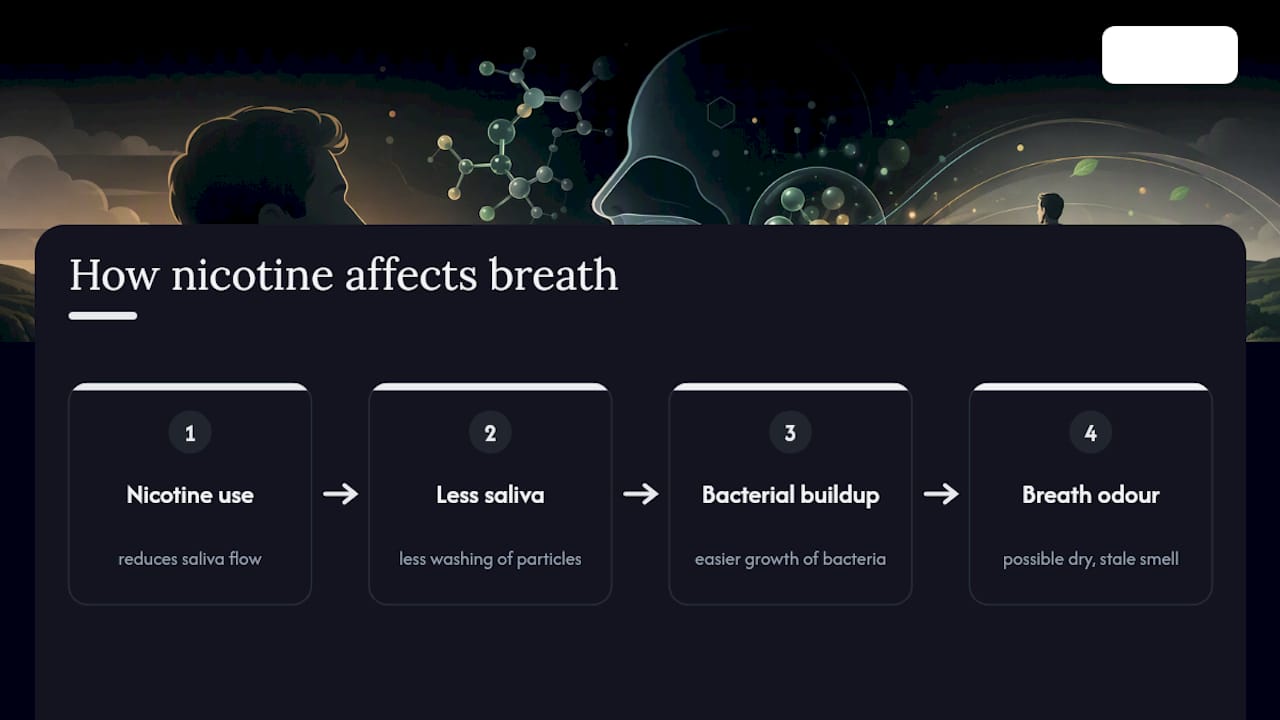
Pouches don’t add tobacco odour to your breath the way smoking does, but they can indirectly worsen breath through dryness. A review of nicotine’s oral effects links nicotine use to reduced saliva production and related short-term effects, including dry mouth and soreness. The same literature notes that pouches lack the smoke-related odour of cigarettes, but that doesn’t mean they’re free of every oral consequence.
Practically, this shows up as a slightly dry, less fresh feeling after extended use rather than a strong smell. Signs worth paying attention to include a persistent dry mouth that doesn’t ease with water, a metallic or stale taste that lingers between pouches, or breath that stays off even after brushing. If any of that becomes a regular pattern rather than an occasional thing, it’s worth mentioning to a dentist. Dry mouth left unmanaged over the long term can affect more than just breath.
Flavour, strength and format: what changes detectability
Not every pouch behaves the same way once it’s in your mouth or sitting in your pocket. Mint and menthol flavours tend to leave a clean, fresh note that’s barely noticeable to anyone but you. Very sweet or heavily concentrated fruit flavours are usually the ones people pick up on when a can gets opened nearby, simply because the aroma compounds used to create those flavours are stronger.
Nicotine strength plays a role too, though indirectly. Higher-strength pouches are more likely to bring on the dry mouth that contributes to breath issues, since the effect is dose-related rather than flavour-related.
Format matters just as much:
- Slim or mini pouches generally hold less filling, so there’s less material to produce saliva or residue
- Low-drip pouch technology reduces the amount of liquid that transfers to your mouth, cutting down on the surface moisture that can carry scent
- Thicker, longer-format pouches can produce more drip and, in turn, more of the saliva changes linked to odour
Pro Tip: If discretion matters more to you than flavour variety, stick with a single mild mint option rather than switching between strong fruit flavours. Consistency reduces the chance anyone associates a specific smell with your habit.
How to avoid breath odour and stay discreet while using pouches
A few habits make a real difference if you’re using pouches regularly and want to avoid dry mouth or any detectable scent.
- Drink water throughout the day. Hydration is the single most direct way to counter the saliva reduction nicotine causes.
- Chew sugar-free gum or use xylitol. Both stimulate saliva flow, which helps keep bacteria levels down between pouches.
- Brush and floss twice daily. This is standard advice for a reason. It removes the food particles and plaque that bacteria feed on.
- Use a mouth rinse after a pouch, especially before social situations. It resets your breath faster than waiting it out.
- Avoid strong-smelling foods before events where discretion matters. Garlic and coffee do more to your breath than any pouch will.
- Keep cans sealed and stored somewhere cool. Heat speeds up flavour degradation and can intensify the smell when you do open the can.
- Dispose of used pouches properly and wash your hands after handling the can. Most detectable scent comes from handling, not from the pouch in your mouth.
| Action | Why it helps |
|---|---|
| Hydration | Directly counters nicotine-related saliva reduction |
| Sugar-free gum or xylitol | Stimulates saliva, limits bacterial growth |
| Brushing and flossing | Removes bacteria’s food source |
| Mouth rinse after use | Quick reset for breath before social contact |
| Sealed, cool storage | Slows flavour degradation and can-opening scent |
| Discreet disposal and handwashing | Removes the main source of hand and can transfer |
If dry mouth or bad breath persists despite these steps, that’s a signal worth raising with a dentist rather than managing indefinitely on your own.
How FUZE’s pouch design factors into discretion
Product engineering matters more than most people assume when it comes to staying discreet. FUZE builds its pouches around low-drip technology, which limits how much liquid transfers to your mouth during use. Less drip means less of the saliva disruption that contributes to breath issues over a session.
The three flavours are engineered to last between 30 and 60 minutes, so there’s no need to swap pouches repeatedly through the day, which itself reduces how often a can gets opened and how often flavour aroma escapes into the air. The rapid nicotine release also means shorter total mouth contact time per pouch.
A few practical points worth knowing:
- Flavour longevity reduces how often you’re handling the can or a fresh pouch
- Low-drip design directly targets the saliva transfer linked to dry mouth
Can nicotine pouch aromas trigger allergies or sensitivity?
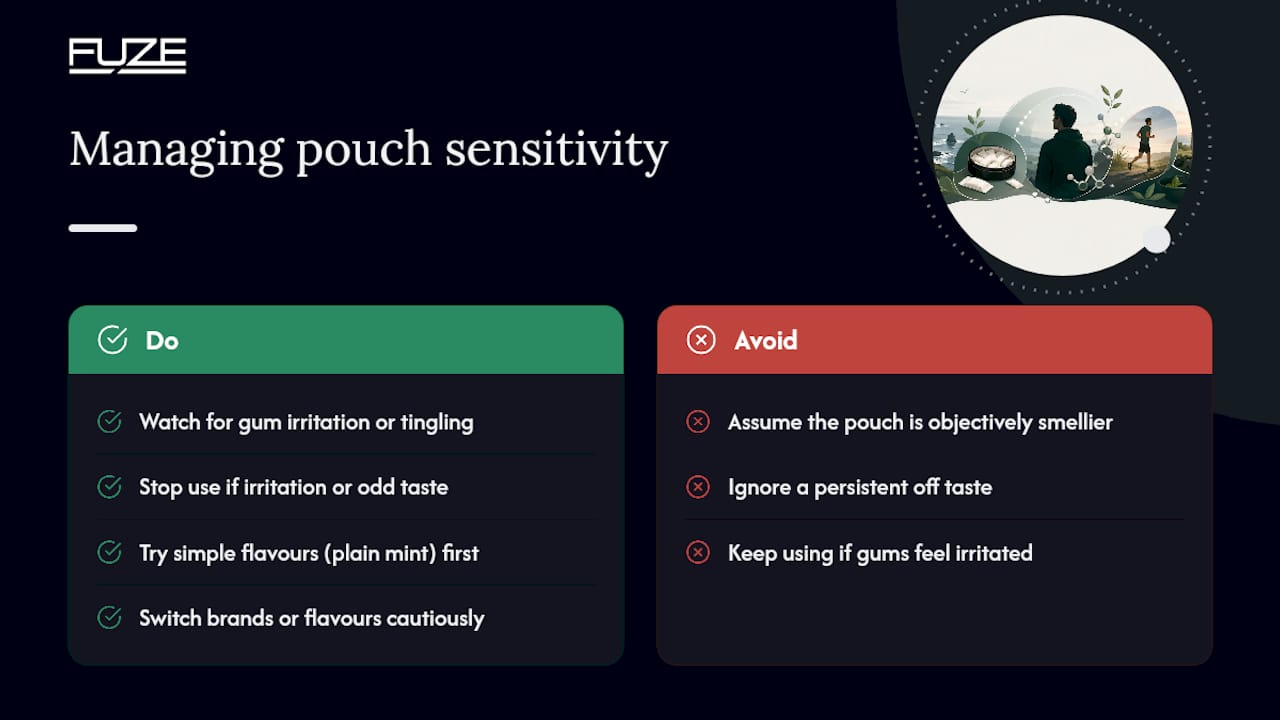
Some people report mild sensitivity to the flavouring or sweetening agents used in pouches, distinct from any reaction to nicotine itself. This tends to show up as a tingling sensation, minor gum irritation, or an unusually strong perception of a flavour’s scent, even when someone nearby wouldn’t notice anything.
That sensitivity can actually affect how a smell is perceived rather than how strong it objectively is. If your mouth reacts to a menthol or cinnamon-style flavour, you might notice the scent lingering on your own breath longer than someone using the same pouch without any sensitivity. That’s a personal reaction, not evidence the pouch itself is more odorous than usual.
Anyone with known sensitivities to common flavouring compounds, artificial sweeteners, or menthol specifically should watch for irritation in the gum line or a persistent off taste that doesn’t match typical use. These reactions are generally mild and resolve once use stops, but they’re worth noting if you switch brands or flavours and suddenly notice a stronger scent or taste than before. Choosing a simple, well-tolerated flavour profile such as plain mint reduces the odds of a sensitivity reaction complicating things, and it keeps the actual, external smell as minimal as the pouch format allows.
When discretion matters: etiquette and realistic expectations
Nicotine pouches are discreet, but not invisible. Someone standing close enough, or catching you mid can-opening, can still pick up a flavour note. That’s a realistic limit worth accepting rather than assuming total odourlessness.
If a meeting, date, or enclosed space calls for extra caution, mild mint beats anything sweet or fruity, and sealed handling with prompt disposal closes the remaining gaps. It’s a habit of care, not a guarantee.
One more thing worth stating plainly: nicotine is addictive, and pouches are intended for adult use only, subject to the legal age limits that apply wherever you’re buying and using them.
— FUZE Team
Triple Mint 20mg: a discreet option worth knowing about
If a clean, low-detection flavour is what you’re after, Triple Mint 20mg is built around exactly that brief. Mint is the flavour profile least likely to draw attention at close range, and it pairs with FUZE’s low-drip pouch technology to limit the saliva transfer that contributes to dry mouth over a session.
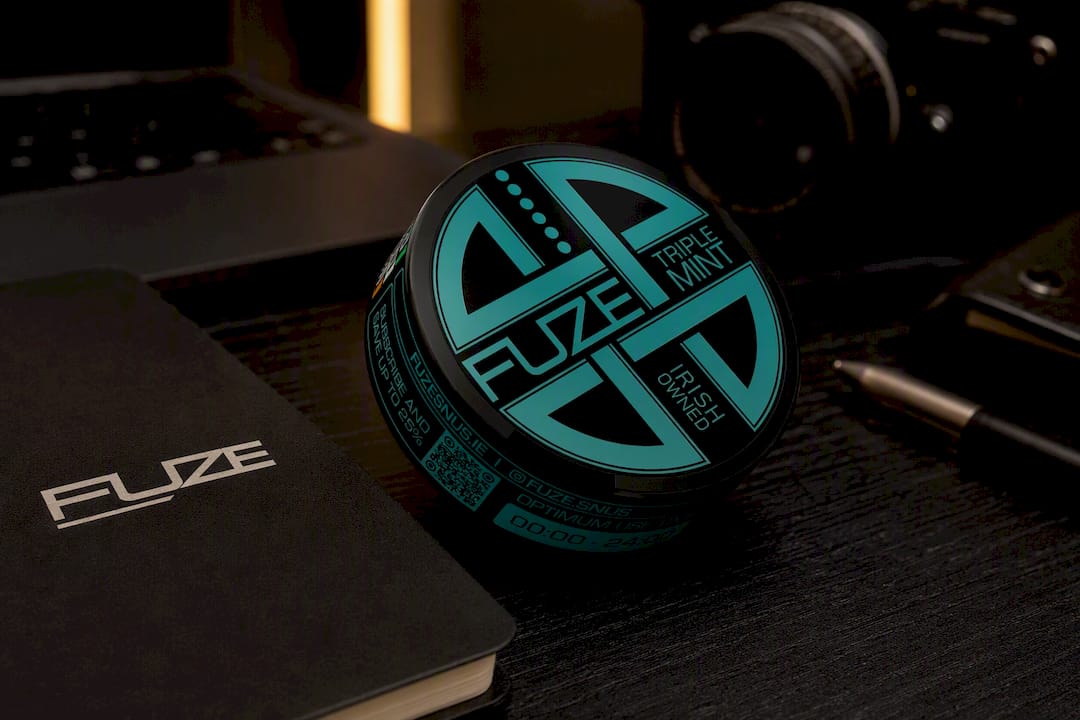
This brand is built on rapid, smooth nicotine release without the drip that makes some pouches uncomfortable to use through a full 30 to 60 minute session. Some order placements qualify for same-day delivery in select counties, with international shipping available for readers outside that range. If breath freshness and discretion are what brought you here, Triple Mint 20mg is a straightforward starting point. Head to the product page to check current stock and place an order.
Sources
- Nicotine pouches: a narrative review of the existing literature
- Narrative review (excerpt on nicotine effects and oral health)
FAQ
Do nicotine pouches make you smell?
Not in the way cigarettes do. There’s no smoke or combustion, so there’s nothing to cling to clothes or hair, though a flavoured pouch can leave a faint, short-lived scent detectable only at close range.
What does breath smell like after using a mint pouch?
Mint and menthol pouches typically leave breath smelling fresh rather than off, since the flavour itself masks any dryness-related odour during use. Once the dry-mouth effect sets in later, breath can turn stale if hydration and oral hygiene are neglected.
Can dentists tell if you use nicotine pouches?
A dentist may notice signs linked to nicotine use, such as gum irritation or dryness, though these aren’t unique to pouches and can have other causes. Persistent dry mouth or unusual breath changes are worth raising directly during a check-up.
Is using nicotine pouches multiple times a day too much?
There’s no single safe frequency that applies to everyone, since it depends on nicotine strength, individual tolerance, and overall use patterns. Anyone concerned about how often they’re using pouches, or about nicotine dependence, should speak with a healthcare professional rather than relying on general guidance.
Recommended
- Vapes vs Snus (Nicotine Pouches) in Ireland
- Tobacco-free Snus (Nicotine Pouches) vs Vapes
- What is a Snus | Nicotine pouch and how do I use it?
- Orange Bubblegum by FUZE | Irish Snus & Nicotine Pouches
This is for general information purposes only, not medical advice. Please consult your doctor if you have medical queries. This article may not be fully accurate or fully researched. Please do your own research and consult professionals before using nicotine. Nicotine is an addictive substance.