


6 to 30mg trial: nicotine pouches side effects for adult smokers
Yes. Nicotine pouches commonly cause local mouth irritation and can trigger dose-dependent systemic effects like a raised heart rate and blood pressure. Nicotine itself is addictive, and long-term risks including cancer and chronic heart disease remain under study rather than ruled out. Switching completely from smoking may cut your exposure to combustion toxins, but that does not make pouches risk free.
TL;DR:
- Higher-strength pouches (20mg and above) cause more intense short-term effects, including faster heart rate increases and mouth irritation.
- Nicotine delivery varies significantly between brands and batches, with some containing undisclosed contaminants and inconsistent nicotine levels.
- Long-term risks such as cancer and heart disease remain uncertain due to limited population studies and short-term industry-funded research.
- Using pouches repeatedly in the same mouth spot increases gum irritation risk, so rotating placement and monitoring sores is advised.
- Nicotine pouches pose additional risks for pregnant women, adolescents, and people with heart conditions, requiring careful consideration and medical consultation.
Table of Contents
- Nicotine pouches side effects: what happens in the short term
- Can nicotine pouches damage your gums and mouth?
- Do nicotine pouches raise your heart rate and blood pressure?
- What don’t we know about long-term nicotine pouch risks?
- Why do nicotine pouches vary so much between brands?
- Are nicotine pouches safer than smoking or vaping?
- What should you do if a nicotine pouch causes side effects?
- Where does Fuzesnus stand on the risks?
- Nicotine pouches during pregnancy and fetal development
- Nicotine pouches and the developing adolescent brain
- Do nicotine pouches interact with any medications?
- How do pouch side effects compare with vapes and smokeless tobacco?
- Where the caution around nicotine pouches gets overdone, and where it doesn’t
- Where Fuzesnus fits if you’ve made your choice
- Sources
Nicotine pouches side effects: what happens in the short term
The most commonly reported reactions show up fast, usually within minutes of placing a pouch, and they’re mild for most people using standard-strength products. A 2024 clinical trial tracking users across 6mg, 20mg and 30mg pouches found the pattern you’d expect: symptoms scale with dose.
Common short-term side effects include:
- Mouth or gum soreness where the pouch sits
- Dry mouth
- Nausea, particularly in new users
- Hiccups
- Headaches
- Dizziness or light-headedness
The highest-strength pouches produced the strongest reactions in that trial, including notable heart-rate increases and the highest nicotine blood concentration of the group, higher than a typical cigarette delivers. One participant had a mild circulation issue that resolved on its own. No serious adverse events occurred, but the dose-dependent nicotine delivery data makes the pattern clear: stronger pouches mean stronger, faster reactions, especially in the first few sessions before tolerance builds.
Can nicotine pouches damage your gums and mouth?
Mucosal irritation is the most consistently reported oral health risk. Reviews of clinical data on switchers describe redness, occasional mild ulceration and gum inflammation where the pouch makes contact, and some case reports note gum recession with heavy, sustained use in the same spot.
That said, short-term switching studies also found some reductions in gingival inflammation among people who moved entirely away from cigarettes over 12 to 24 weeks, though the sample sizes were small and the follow-up periods too brief to say much about years of use.
- Rotate where you place the pouch rather than using the same spot every time
- Get regular dental check-ups if you use pouches daily
- Watch for sores that don’t heal within a week or two
Pro Tip: Moving the pouch to a different spot in your mouth each time you use one reduces the chronic contact that seems to drive most gum irritation.
Do nicotine pouches raise your heart rate and blood pressure?
Yes, and the effect tracks the strength of the pouch. The same 2024 trial that measured oral irritation also tracked cardiovascular response, and higher-nicotine pouches produced measurably steeper rises in heart rate and arterial stiffness than lower-dose versions.
- Healthy adults typically experience mild, short-lived increases in heart rate and blood pressure
- Higher-strength pouches (20mg and above) produce noticeably stronger cardiovascular responses than 6mg options
- People with existing heart disease, hypertension, or arrhythmia may feel these effects more acutely
If you have a diagnosed heart condition or you notice palpitations after using a pouch, that’s worth raising with a doctor before continuing, particularly with stronger products. Nicotine’s cardiovascular effects aren’t unique to pouches, but the speed of delivery in high-dose formats appears to amplify them.
What don’t we know about long-term nicotine pouch risks?
This is where the evidence thins out fast. Nicotine acts as a tumour promoter rather than a direct carcinogen, meaning it can help existing abnormal cells grow rather than initiating cancer on its own, according to expert commentary summarised by the American Cancer Society. That distinction matters, but it doesn’t amount to reassurance.
- Nitrosamines and trace contaminants have been detected in some pouch products, and their long-term effects at these exposure levels aren’t established
- Cancer and chronic cardiovascular disease typically take decades to develop, so current studies simply haven’t run long enough to capture them
- Most research so far is short-term, industry-funded, or both, which limits how confidently anyone can draw conclusions
Narrative reviews looking at oral cancer risk and harm reduction agree that pouches likely expose users to fewer harmful constituents than cigarette smoke, but they also stress that long-term epidemiological evidence is missing and that standardised, independent long-term studies haven’t been done yet. Treat “probably less harmful than smoking” and “safe” as two very different claims.
Why do nicotine pouches vary so much between brands?
Not all pouches are created equal, and that inconsistency is itself a risk factor. Independent product surveys have found variable nicotine content and detected tobacco-specific nitrosamines (TSNAs) and other chemicals across different brands and batches, according to reporting from Medical News Today. Nicotine delivery also depends on how fast a pouch releases its contents, not just what the label says the milligram strength is.
- Labelled nicotine content doesn’t always predict actual delivery or peak blood concentration
- Some products have been found to contain contaminants not disclosed on packaging
- Regulation and testing standards vary considerably between markets and manufacturers
Buy from brands that publish clear, consistent labelling and avoid unverified sellers on marketplaces where provenance is impossible to check. A product’s price or packaging tells you nothing about what’s actually inside the pouch.
Are nicotine pouches safer than smoking or vaping?
Nicotine pouches sit in a genuinely different risk category from combustible cigarettes because there’s no combustion, and that matters. Burning tobacco produces tar and thousands of combustion byproducts that pouches simply don’t generate. Reviews of harm reduction evidence describe lower toxicant exposure for people who switch completely, compared with continued smoking.
- Exclusive switching from cigarettes to pouches appears to reduce exposure to combustion-related toxins
- Dual use, smoking and pouching at the same time, largely cancels out that benefit and may add nicotine exposure on top of existing smoking risk
- Pharmaceutical nicotine replacement therapy (patches, gum) has gone through regulatory testing that commercial pouches haven’t
Comparing pouches with vapes runs along similar lines: both avoid combustion, but neither has the long-term safety data that decades of smoking research has produced for cigarettes. Public health voices are consistent on one point: pouches work best as an off-ramp from smoking, not as an addition to it.
What should you do if a nicotine pouch causes side effects?
Most mild symptoms settle once you stop using the pouch or switch to a lower strength.
- Drop to a lower milligram strength or shorten how long you keep the pouch in
- Rotate placement and avoid flavours that seem to trigger irritation for you
- Stop and see a dentist or doctor if you get persistent mouth sores, severe palpitations, fainting, or any sign of an allergic reaction
Pro Tip: If you’re pregnant, breastfeeding, or living with cardiovascular disease, speak to a doctor before using any nicotine product. Generally, avoidance is the safer path in these situations.
Where does Fuzesnus stand on the risks?
We’re not going to tell you nicotine pouches are risk-free, because the evidence doesn’t support that. Mouth irritation is common, nicotine is addictive, and the long-term picture is still being written by researchers, not settled.
Our position is straightforward: pouches are an adult choice for people who already use nicotine and want an alternative to smoking, not a wellness product.
We’d rather you go in informed than surprised.
Nicotine pouches during pregnancy and fetal development
Nicotine crosses the placenta, and that alone is reason for real caution during pregnancy. Regardless of the delivery method, whether it’s a cigarette, a pouch, or a vape, nicotine exposure during pregnancy has been linked in broader tobacco and nicotine research to restricted fetal growth, and effects on developing organs, including the brain and lungs.
Nicotine pouches haven’t been studied specifically in pregnant populations in any meaningful clinical way, which means there’s no dedicated safety data to point to. That absence of research is not the same as a clean bill of health. It simply means nobody has done the work yet to say what a specific dose does to a developing fetus over the course of a pregnancy.
Breastfeeding carries a related concern, since nicotine passes into breast milk and can affect a nursing infant’s heart rate and sleep patterns. Public health guidance across nicotine products, tobacco, vapes, and pouches alike, converges on the same recommendation: pregnant and breastfeeding women should avoid nicotine products entirely rather than assume a smoke-free format is automatically a safe one.
If you’re pregnant, planning a pregnancy, or breastfeeding and currently use nicotine pouches to move away from smoking, that conversation belongs with a doctor or midwife, not a product label. Quitting nicotine altogether, with medical support, remains the recommendation with the strongest backing.
Nicotine pouches and the developing adolescent brain
The teenage and young adult brain is still under construction, and nicotine interferes with that process in ways that don’t apply the same way to a fully developed adult brain. The prefrontal cortex, responsible for judgement, impulse control and attention, keeps developing into the mid-twenties, and nicotine exposure during that window has been associated in adolescent nicotine research with changes to attention span, mood regulation and increased vulnerability to addiction later in life.
Young people also reach nicotine dependence faster than adults do, at lower levels of use, which is part of why public health bodies have flagged youth uptake of flavoured nicotine pouches as a specific concern rather than a general one. Flavours and discreet packaging that appeal to adult smokers looking for an alternative can appeal just as easily to teenagers who’ve never smoked at all, creating a new entry point into nicotine dependence rather than an exit from one.
There’s also a compounding risk worth naming directly: an adolescent who becomes dependent on nicotine through pouches faces a higher chance of trying other nicotine or tobacco products later, according to the broader pattern seen in youth nicotine research generally. None of this is a reason to panic if you’re an adult switching from cigarettes. It’s a reason these products should never reach anyone under the legal purchase age, and why responsible retailers verify age at every sale.
Do nicotine pouches interact with any medications?
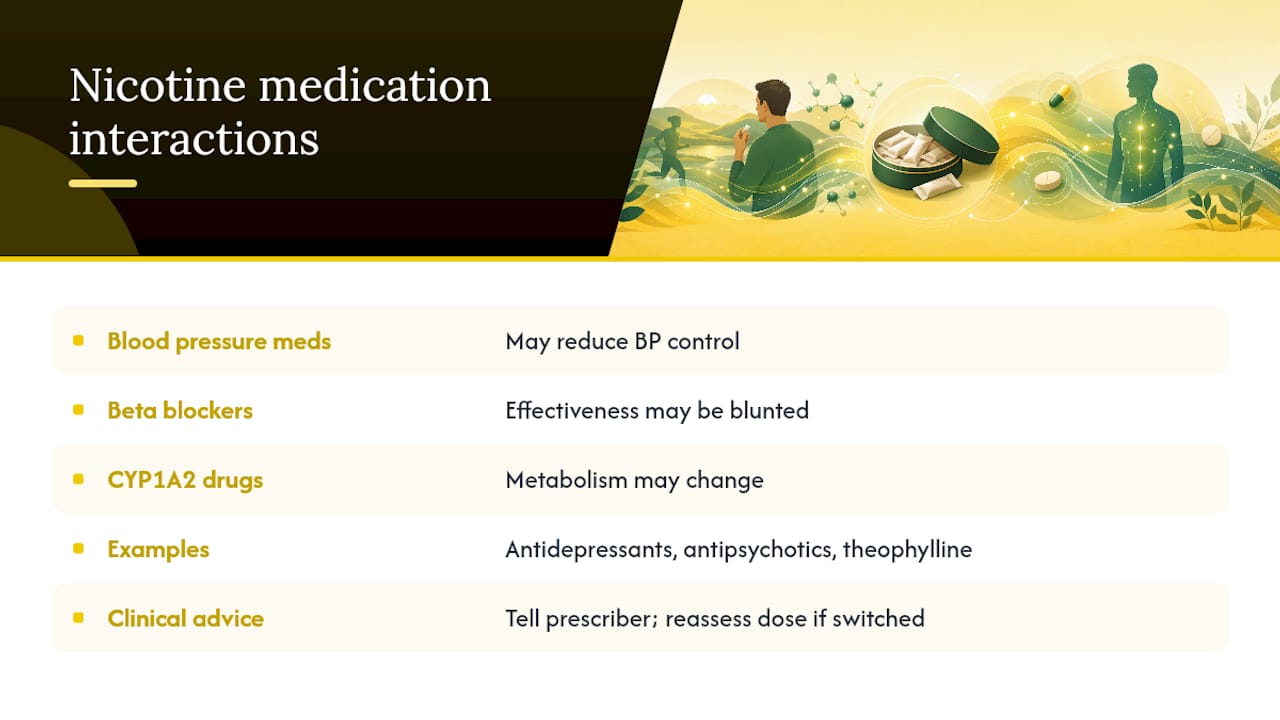
Nicotine affects the body in ways that can interact with several common medication classes, and this is an area where the guidance is more about caution than certainty, because dedicated interaction studies on pouches specifically are limited.
Nicotine is a stimulant that raises heart rate and blood pressure, so it can work against medications prescribed to manage cardiovascular conditions, including beta blockers and other blood pressure treatments. Combining nicotine with these drugs doesn’t cancel their effect outright, but it can blunt how well they control your numbers, which matters if you’re being monitored for hypertension or arrhythmia.
Nicotine also affects how the liver processes certain drugs through changes to enzyme activity, most notably CYP1A2, an enzyme involved in metabolising some antidepressants, antipsychotics and asthma medications like theophylline. Smokers who quit smoking but continue using nicotine in another form can sometimes need their medication doses reassessed, because the enzyme changes linked to nicotine and smoking don’t always follow identical patterns.
If you’re on prescribed medication, particularly for mental health, asthma, or cardiovascular conditions, and you’re using nicotine pouches regularly, it’s worth mentioning to your prescriber. This is especially relevant if you’ve recently switched from smoking to pouches, since your medication dose may have been calibrated around your previous smoking habits rather than your current nicotine intake.
How do pouch side effects compare with vapes and smokeless tobacco?
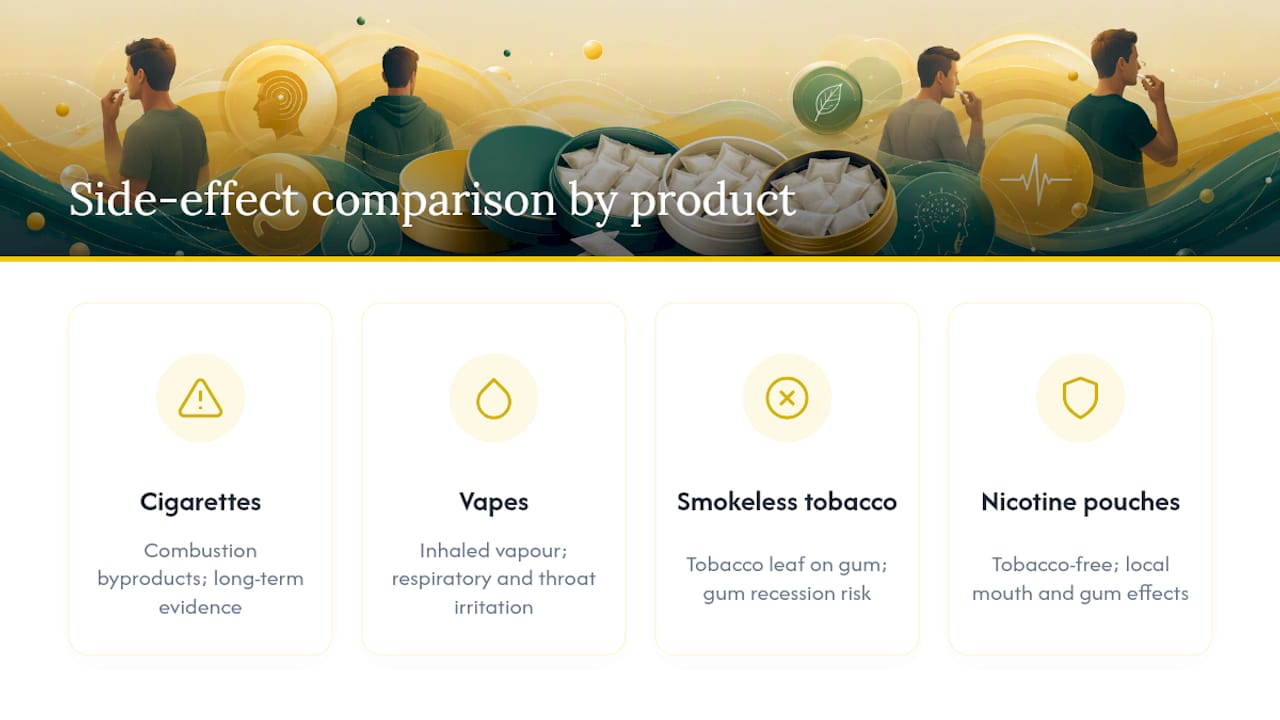
Every nicotine delivery method carries its own side effect profile, and the differences are worth knowing before you assume one option is automatically gentler than another.
Traditional smokeless tobacco, like chewing tobacco or moist snuff, delivers tobacco leaf directly against the gum and carries a well-documented risk of gum recession, leukoplakia, and oral cancer tied to decades of epidemiological data that nicotine pouches simply don’t have yet, because pouches are tobacco-free and far newer to the market. That longer track record cuts both ways: more evidence of harm, but also more certainty about what that harm looks like.
E-cigarettes deliver nicotine through inhaled vapour, which brings a different set of concerns, respiratory irritation, throat irritation, and questions around flavouring chemicals reaching the lungs, that oral pouches don’t produce because nothing is inhaled. Pouches instead concentrate their side effects locally in the mouth and gums, plus the same systemic cardiovascular effects nicotine produces regardless of delivery route.
Compared directly, vapes and pouches both avoid the combustion byproducts of cigarettes, but they trade one set of unknowns for another. Neither has anything close to the multi-decade safety record of combusted tobacco research, for better or worse, and neither should be assumed automatically safer than the other without looking at your own health profile and habits.
Where the caution around nicotine pouches gets overdone, and where it doesn’t
The instinct to treat nicotine pouches as either a miracle exit from smoking or a hidden danger misses the more useful middle ground the evidence actually supports. Pouches are almost certainly less harmful than continuing to smoke, the absence of combustion products backs that up. But “less harmful than cigarettes” has been stretched by marketing into something closer to “harmless,” and that’s not a claim the research makes.
What gets underplayed, in our view, is product variability. Two pouches with the same milligram label can deliver meaningfully different nicotine loads depending on formulation, and that inconsistency deserves more attention than it gets in most consumer discussion. The addiction risk also gets glossed over too easily by people focused purely on the combustion comparison. Nicotine dependence is real regardless of the format carrying it.
If you’re weighing this up, prioritise two things: choosing transparently labelled products from accountable sellers, and being honest with yourself about whether you’re switching completely or just adding another nicotine source to your day.
— FNGN
Where Fuzesnus fits if you’ve made your choice
If you’ve decided nicotine pouches are the right harm-reduction step for you as an adult smoker moving away from cigarettes, product quality and consistency become the next thing worth getting right. Some nicotine pouch brands use rapid-release, low-drip technology, designed to avoid an unpleasant seep, with some offering multiple flavours that last between 30 and 60 minutes.
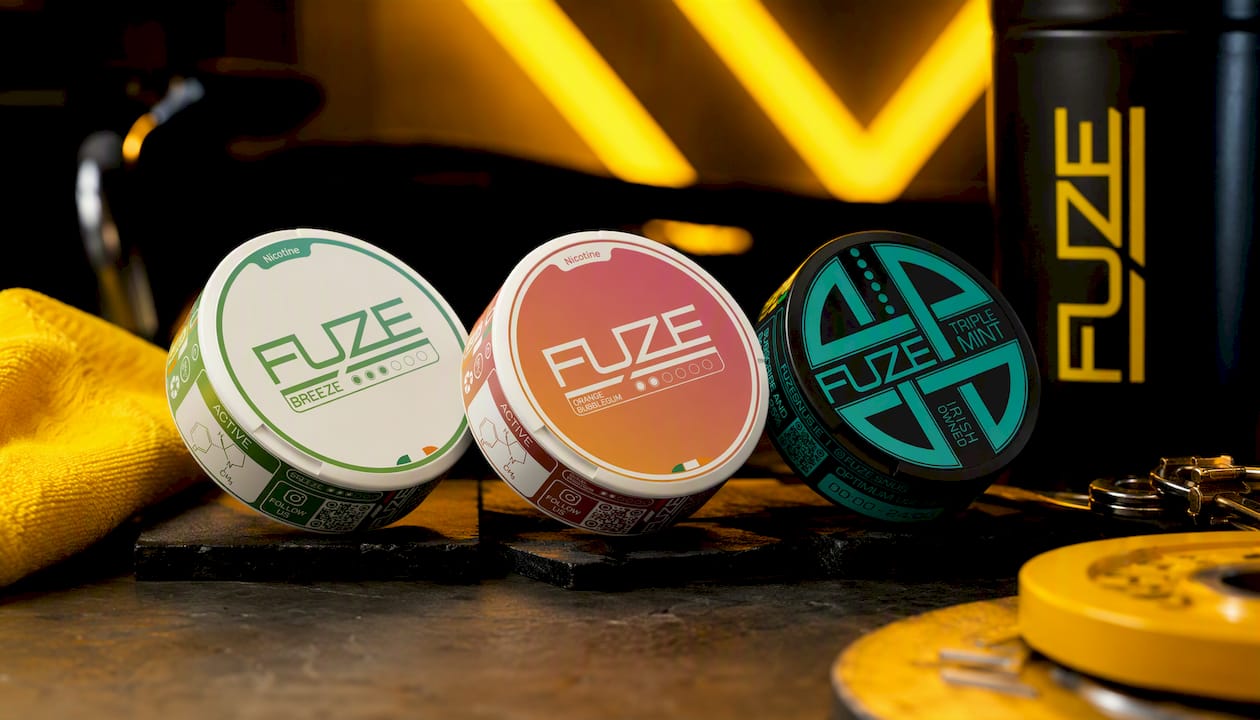
The range covers different strengths depending on what you’re used to. BREEZE 10mg suits people wanting a gentler introduction, Orange Bubblegum 8mg offers a milder, flavour-forward option, and Triple Mint 20mg is built for established users wanting a stronger hit. Orders placed by 6pm qualify for same-day delivery in select counties, with international shipping available beyond that.
Keep any nicotine product locked away from children and pets, and speak to a doctor if you have a heart condition, are pregnant, or take medication that might interact with nicotine. If you’re ready to try a pouch built for how you actually use it, the full range is available now on the Fuzesnus site.
This article is general information, not a substitute for advice from a qualified doctor. Consult a qualified healthcare professional about your own circumstances before acting on anything here.
Sources
- Small pouches, but high nicotine doses—nicotine delivery and acute effects after use of tobacco-free nicotine pouches
- What to Know About Nicotine Pouches and Cancer Risk
- Nicotine pouches: Are they bad for you? — Medical News Today