


Nicotine Pouch Duration: Clinical Peaks and Fuzesnus Timing Tips
Most nicotine pouches deliver their main effect across roughly 20 to 60 minutes in the mouth, with nicotine levels peaking around 15 to 30 minutes after placement and the perceived effect tapering over the following one to two hours. Manufacturers, including FUZE, typically frame “up to 60 minutes” as the ceiling rather than the norm, so treat that figure as a guide, not a target.
TL;DR:
- Nicotine levels peak at 15 to 30 minutes and most of the nicotine is released within the first 30 minutes of use.
- Shorter, drier pouches typically deliver nicotine faster and feel active for a briefer period compared to moist, larger formats.
- Holding a pouch longer increases overall nicotine exposure but does not extend its active or perceptible effects.
- Signals to remove a pouch include flat flavor, faded tingle, and potential gum irritation, usually around 30 to 60 minutes.
- Moving to lower-strength pouches or removing them earlier helps manage intake and improve session comfort.
Table of Contents
- Nicotine pouch duration: what a typical session actually feels like
- How long does the nicotine effect last after using a pouch?
- What changes how long a pouch feels active
- When should you take a pouch out?
- How long do nicotine pouches last before they go off?
- How Fuzesnus builds duration into every pouch
- What the timing data actually tells you to do differently
- Which Fuzesnus pouch matches your session?
- Sources
Nicotine pouch duration: what a typical session actually feels like
A pouch doesn’t deliver nicotine at a steady rate from start to finish. The first few minutes bring the strongest sensation: flavour hits fast, the tingle sets in, and most of the nicotine transfer happens in that early window. Clinical extraction data shows that 11mg and 20mg pouches release a substantial portion of their total nicotine content within the first 30 minutes alone, typically in the range of about one-third to just under half. Everything after that is a gradual fade.
This is why the manufacturer phrase “up to 60 minutes” causes confusion. It describes the outer limit some formats can tolerate before they turn dry and flavourless, not the point where most people stop. Plenty of users pull a pouch at 20 or 30 minutes because the sensation has already dropped off, while others keep one in for the full hour out of habit rather than benefit.
Format changes this arc noticeably:
- Mini and slim pouches tend to release faster because there’s less material and less moisture to work through, so the strong phase is shorter.
- Standard-sized, moist pouches front-load flavour and nicotine, giving a sharper early hit that fades sooner in relative terms.
- Dry-format pouches extract more slowly, stretching the tail end of the session even after the initial punch has faded.
Knowing when a pouch is “spent” comes down to two signals: the taste has flattened out, and the tingling sensation that told you it was working has disappeared. Once both are gone, you’re just holding an inert pouch. If you’re weighing a pouch against a vape’s delivery pattern, the pouch’s slower, sustained curve is the main practical difference.
How long does the nicotine effect last after using a pouch?
The feeling from a pouch usually outlasts the pouch itself, and that gap catches a lot of first-time users off guard. Plasma nicotine typically peaks, or reaches tmax, somewhere between 15 and 30 minutes after you place a pouch, according to pharmacokinetic research on nicotine pouches. The perceived effect then tapers gradually, sometimes lingering for one to two hours after you’ve spat the pouch out.
In a seven-way crossover study, average tmax for nicotine pouches landed around 32.5 to 34.4 minutes, noticeably slower than the near-instant curve of a combustible cigarette.
That slower curve matters for how you think about dose. The longer a pouch sits in your mouth, the greater the total nicotine exposure, measured as AUC (area under the curve) in pharmacokinetic terms. Controlled crossover trials confirm extraction increases progressively with longer hold times such as 10, 20, and 30 minutes, indicating that shorter holds generally result in lower overall nicotine intake.
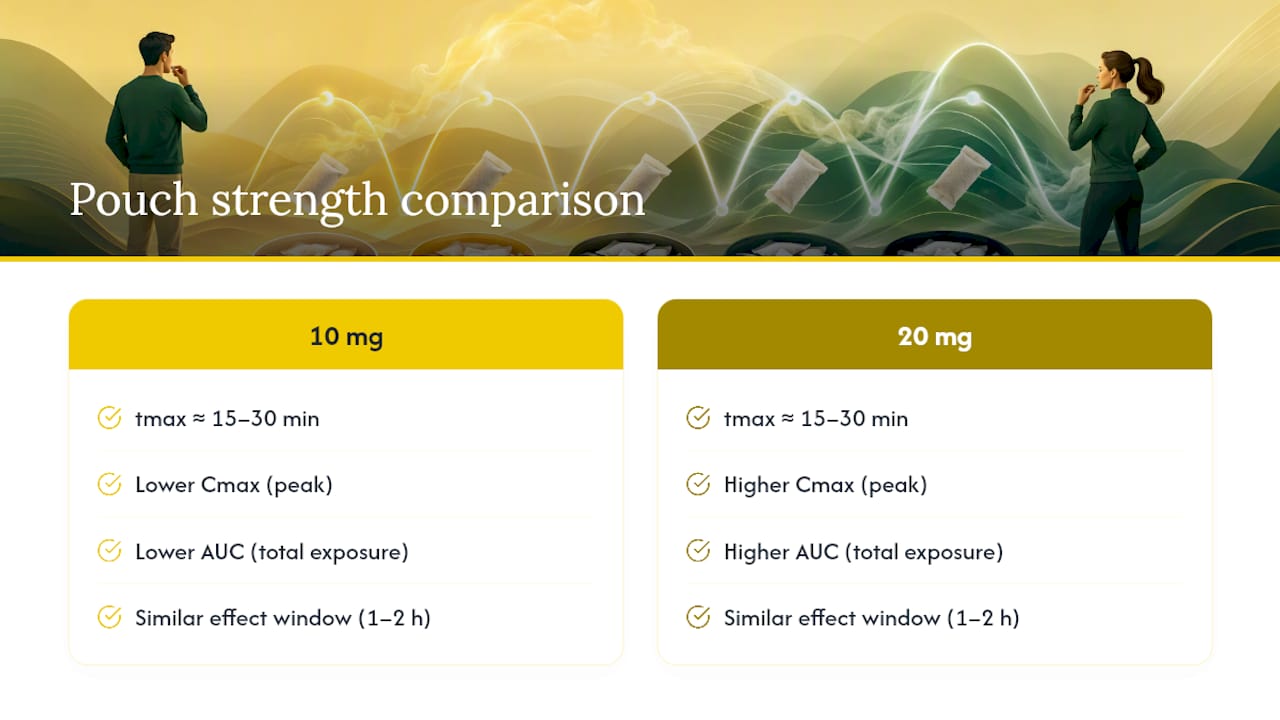
Strength works differently. A higher milligram pouch raises Cmax and AUC, the peak concentration and total exposure, but it doesn’t stretch the time window. A 20mg pouch and a 10mg pouch of the same format follow a similar timeline; the stronger one just hits harder within it. If you want less nicotine overall, pulling the pouch earlier does more than switching to a lower strength alone.
What changes how long a pouch feels active
Several variables you control directly affect how a session plays out, and understanding them lets you tune the experience rather than guess at it.
- Format size: minis extract fastest, slims sit in the middle, and standard pouches hold material longest.
- Moisture level: dry slims release slowly and stretch the tail of the session; moist formats front-load everything and fade sooner.
- Nicotine strength: raises intensity (Cmax and AUC) but doesn’t meaningfully change wear time, and stronger pouches can feel uncomfortable if held too long.
- Placement: tucking the pouch high against the upper lip and rotating sides between uses tends to give more even extraction and less irritation.
- Saliva behaviour: swallowing saliva rather than spitting it changes how much nicotine reaches your system versus how much gets diluted away.
- Personal factors: tolerance, how recently you last used nicotine, and individual metabolism all shift how strong and how long a session feels.
Pro Tip: If you’re using several pouches a day, testing a lower-strength option like a 10mg pouch before reaching for the strongest tin you can find usually gives a more even, comfortable session without the harsh tail end that heavier pouches can bring.
When should you take a pouch out?
Three signals tell you a pouch has done its job: the flavour has gone flat, the tingle has faded, and you might start noticing mild gum irritation if it’s stayed in too long. Holding on past that point rarely delivers meaningful extra nicotine, since extraction has already slowed to a crawl, but it does raise the risk of local soreness or a queasy feeling if the pouch is strong.
A few practical rules keep things comfortable:
- Pull the pouch once taste and tingle are both gone, generally somewhere inside that 30 to 60 minute window.
- Rotate placement between sides of your mouth to avoid repeated irritation in one spot.
- If you’re using multiple pouches daily, favour a lower strength rather than stretching sessions with a strong one.
- Stick close to the packaging’s stated upper limit rather than treating it as a floor.
If you’re finding it hard to manage intake or want support cutting down, resources like the American Cancer Society’s quitting guidance are a genuinely useful starting point.
How long do nicotine pouches last before they go off?
Shelf life is a separate question from session length, but the two are connected: a stale pouch extracts differently to a fresh one. Unopened cans generally hold their quality for a fairly long window, often somewhere in the region of six to eighteen months depending on the brand and how the tin was stored before it reached you. Always check the printed best-before date rather than relying on a rule of thumb.
Once a can is opened, freshness starts to slide much faster. Most people notice the sharpest flavour and moisture in the first one to two weeks after opening, and pouches can still be used well beyond that, just with a drier texture and a more muted release.
A few storage habits go a long way; for example, proper pouch storage and handling tips can help keep your pouches fresh longer.
- Keep the can sealed shut between uses rather than leaving it open on a desk.
- Store it somewhere cool and dark, away from direct sunlight or a hot car dashboard.
- Refrigeration can slow drying out, but let the tin come back to room temperature before opening to avoid condensation inside.
- A pouch past its best-before date isn’t typically unsafe, but expect weaker flavour and a slower nicotine release.
How Fuzesnus builds duration into every pouch
Fuzesnus designs its pouches around a rapid, smooth nicotine release with minimal drip, so the early phase of a session feels clean rather than harsh. The three flavours in the range each suit a different pattern of use. BREEZE 10mg gives a milder, steadier release suited to readers who want a manageable session or plan to use several pouches across a day. Orange Bubblegum 20mg and Triple Mint 20mg step up the intensity for anyone who wants a stronger, more pronounced effect from a shorter hold. Matching strength to how often you use pouches in a day, rather than defaulting to the strongest tin available, tends to give a more comfortable experience overall.
What the timing data actually tells you to do differently
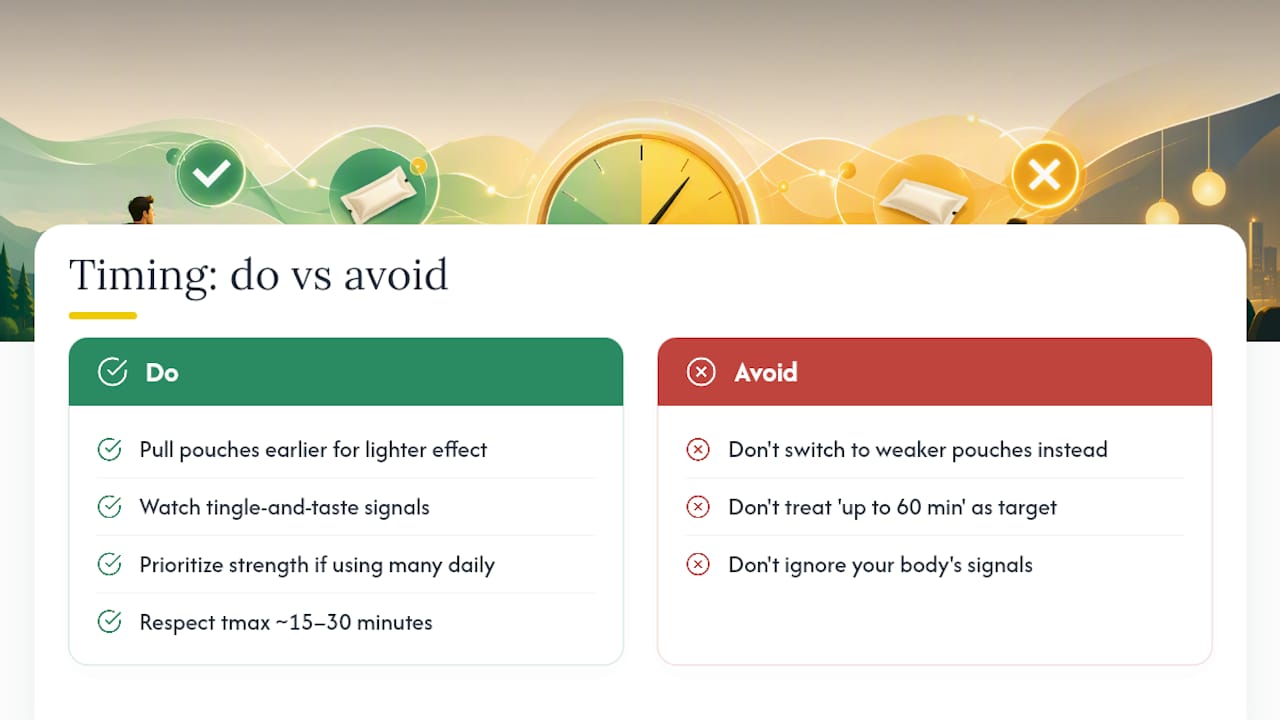
Most advice on nicotine pouches focuses on flavour and strength, and almost none of it mentions hold time as the lever readers actually control. That’s the gap worth closing. The clinical picture is fairly clear: extraction rises steadily the longer a pouch sits, tmax lands around 15 to 30 minutes for most formats, and strength changes intensity without changing the clock. Conventional guidance treats “up to 60 minutes” as a target to hit rather than a ceiling to respect, and that’s backwards.
The practical priority is simple. If you want a lighter, more controllable experience, pull the pouch earlier rather than switching to a weaker one. If you’re using multiple pouches daily, strength matters more than duration for managing total intake. Pay attention to your own tingle-and-taste signal before you pay attention to the clock on the packet. It’s a more honest indicator of what your body is actually getting than any printed time limit.
— FNGN
Which Fuzesnus pouch matches your session?
Fuzesnus was built around exactly the timing patterns covered above: a fast, smooth release with no unpleasant drip, so the first 20 to 30 minutes feel clean rather than overwhelming. If you want a steady, all-day option, BREEZE 10mg gives a gentler curve that suits multiple pouches across a day.
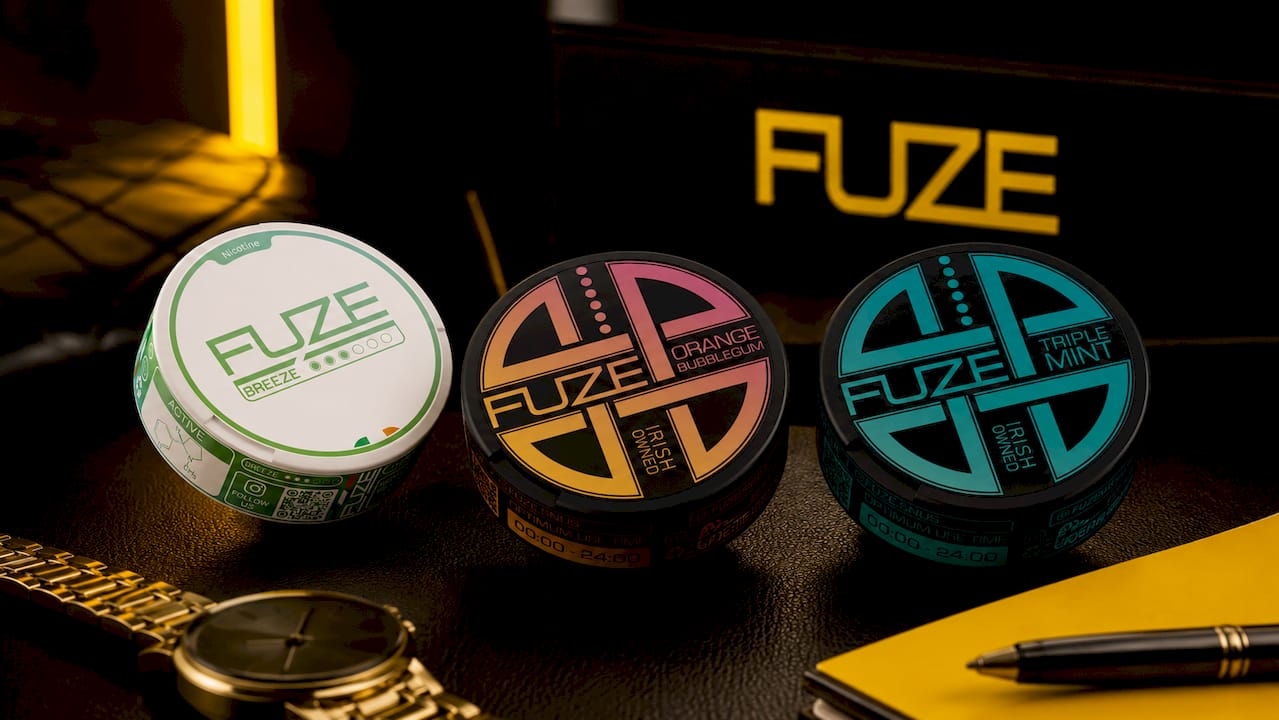
Want more intensity from a shorter hold? Orange Bubblegum 20mg and Triple Mint 20mg both deliver a stronger effect within the same practical window, so you get more from less time rather than a longer session. If you’re newer to pouches, starting with the lower strength and adjusting from there beats guessing your way through a stronger tin. For guidance on placement and first-time use, the how-to guide on using a pouch is worth a read before your first order.
This article is general information, not a substitute for advice from a qualified doctor. Consult a qualified healthcare professional about your own circumstances before acting on anything here.
Sources
- A randomized crossover clinical study to assess the effect of oral nicotine pouches used for different durations on plasma nicotine pharmacokinetics
- A Randomized Crossover Clinical Study to Assess the Effect of Oral Nicotine Pouches Used for Different Durations on Plasma Nicotine Pharmacokinetics